The Same Brief, Two Centuries Apart
The grand tourer is one of motoring's oldest and most romantic ideas: a car built not for the lap time but for the journey — beautiful enough to stop traffic, comfortable enough to cross a continent, fast enough that distance ceases to matter. Both cars on this page answer that brief with conviction. They simply arrive from opposite ends of automotive history.
The Aston Martin DB12 is the modern flowering of a lineage stretching back to the DB2 — hand-built in Gaydon, England, and positioned by its maker as a 'super tourer', the definitive front-engined GT of its moment. Beneath that long bonnet sits a twin-turbocharged V8, and around it a body of genuine sculptural drama. It is craftsmanship and heritage made physical: leather, metal, and a voice tuned over decades.
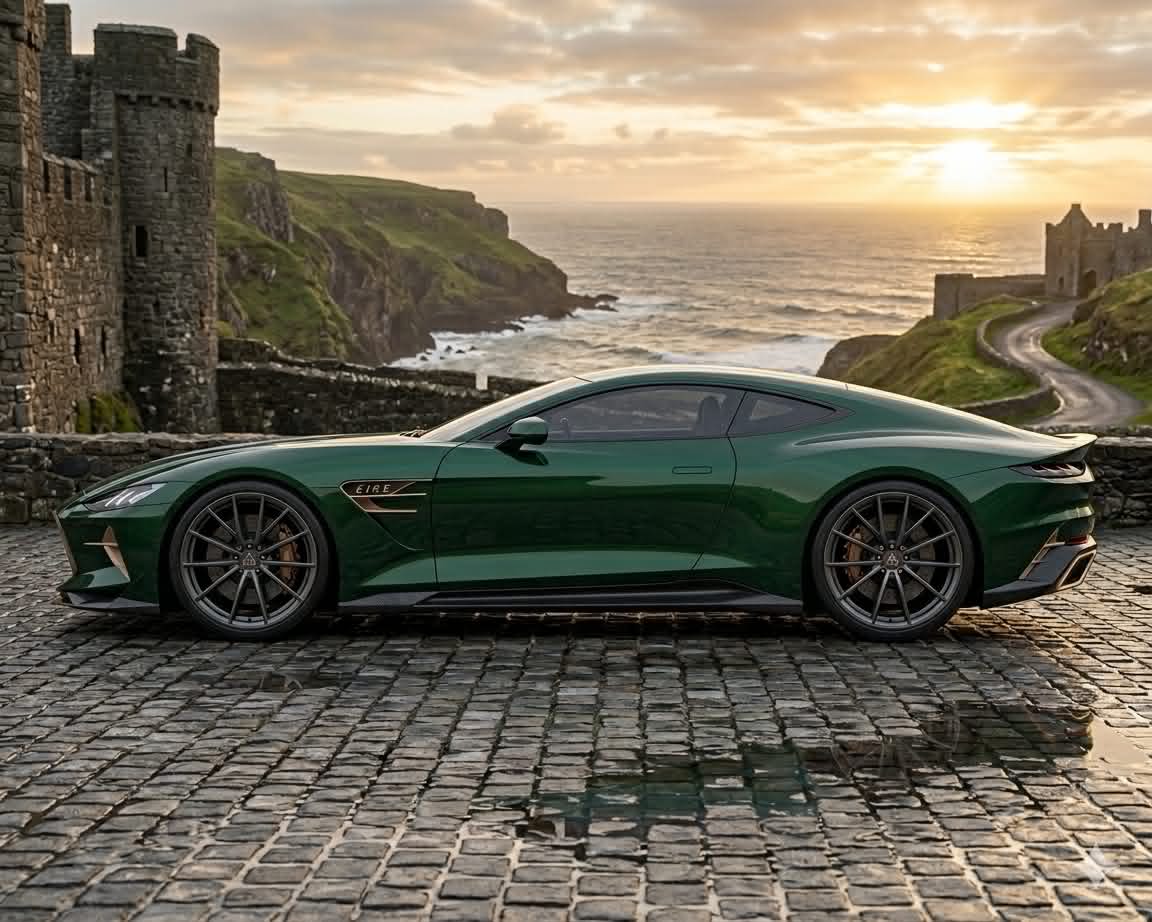
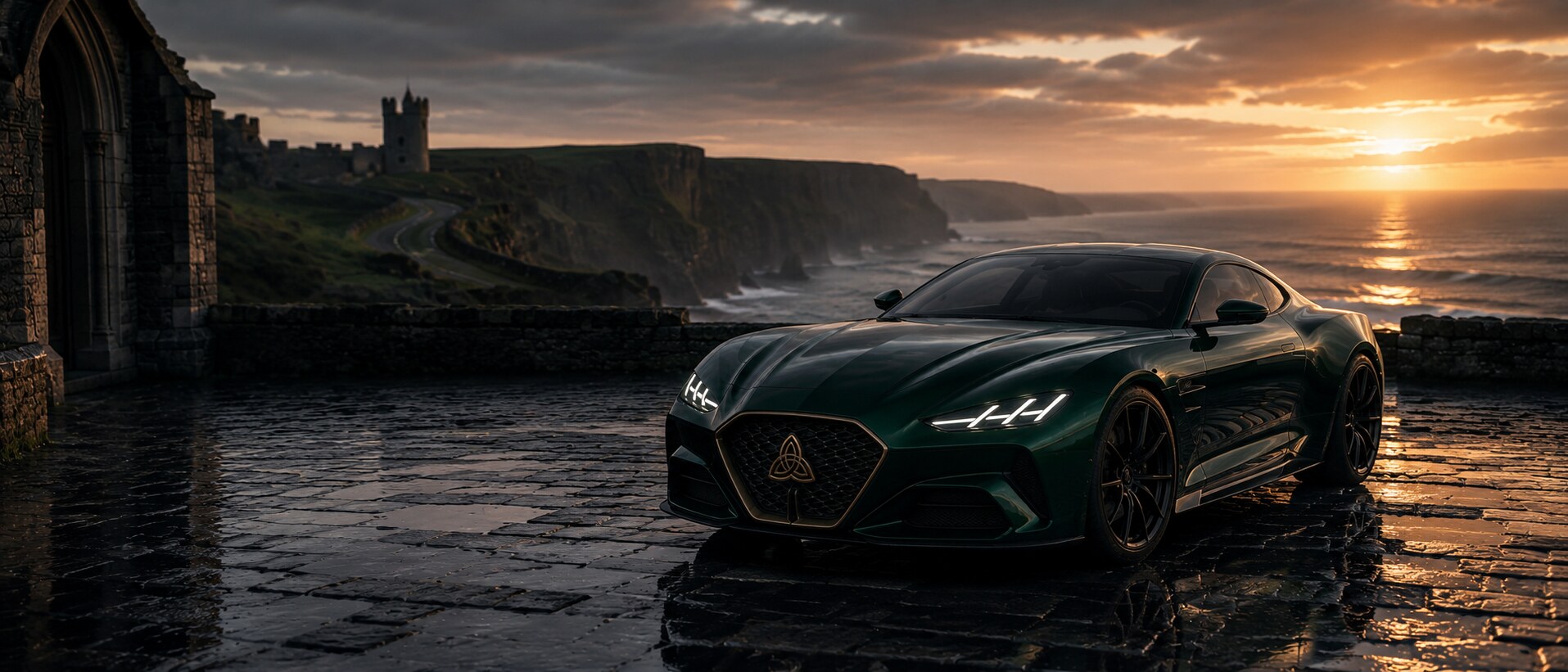
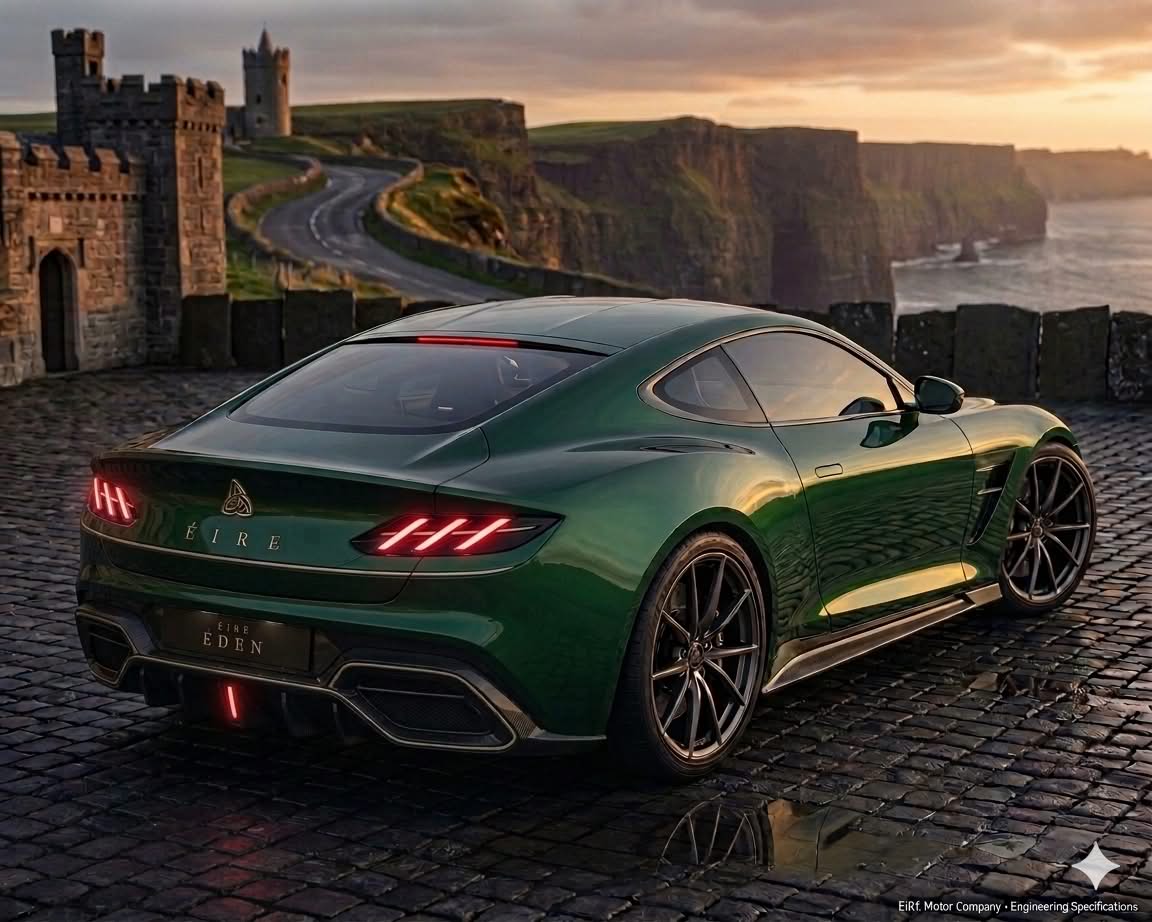
The Éire Eden GT arrives from Ireland, and from the future. It is an all-electric 2+2 grand tourer, all-wheel drive, hand-finished with Irish-inspired craft and conceived around a software-first digital cockpit. It pursues the identical brief — beauty, distance, occasion — but pursues it without a drop of fuel. Where the DB12 celebrates a heritage it has earned, the Eden GT proposes a new one, and binds it to a number: just fifty cars will ever be made.
Drama Versus Serenity
This is, of all comparisons, the one of kindred spirits. Both cars are emotional, design-led objects that believe a grand tourer should move you before it moves at all. The difference lies in how they choose to do it.
The DB12's case is built on theatre. The crackle of a cold start, the hardening note as the revs climb, the mechanical drama of a hand-assembled V8 — these are not incidental to an Aston Martin; they are the point. There is a kind of romance in combustion that no specification sheet captures, and the DB12 wields it with confidence. For the driver who wants the road to feel like an event, narrated by the engine, it is a profoundly persuasive thing.
The Eden GT makes the opposite argument, and makes it just as seriously. Its electric drivetrain offers instant torque and a near-silent gait, so that the experience is not narrated but felt — the rush of acceleration arriving without warning or noise, the cabin left quiet enough to hear the country pass by. It is grand touring reconceived as serenity rather than spectacle.
Neither approach is the correct one, and that is rather the point. The DB12 amplifies; the Eden GT distils. Whether you find more luxury in sound or in silence is a question of temperament, not of merit.
Heritage Versus Exclusivity
An Aston Martin sells, in part, the weight of its own story. The badge carries associations no marketing department could manufacture from scratch — the films, the racing, the long unbroken thread of British grand touring. To buy a DB12 is to step into that continuity, and there is real value in belonging to something so deeply established.
The Eden GT cannot offer heritage, and it is honest enough not to pretend otherwise. What it offers instead is rarity and authorship. As a marque in development, building its first car, it carries no inherited expectations — only the conviction of 'Born of Ireland. Built for the World.' Its exclusivity is not a side effect of price but a deliberate ceiling: a run strictly limited to fifty, with reservations opening to the brand's subscribers first.
These are different kinds of scarcity. The DB12 is rare in the way that any costly, hand-built car is rare. The Eden GT is rare by design and by decree — a near-bespoke object whose value rests partly on the simple fact that almost no one else will ever own one. For some buyers, the established badge will always win. For others, being among the first fifty of something new is the more compelling story.
The Cockpit and the Craft
Inside, both cars treat the cabin as the true theatre of grand touring, and both lean on the work of human hands. The DB12's interior is a study in traditional craft brought up to date — materials chosen and assembled with the care of a company that has always understood the cabin as a place to live, not merely to sit.
The Eden GT shares that reverence for craft, hand-finished with detailing drawn from Irish design, but it pairs the tactile with the digital. Its software-first cockpit is being developed in the open, with live browser previews already running — a sign of a marque that regards the screen and the software as part of the craft rather than a concession to it. The intent is a cabin that feels handmade and contemporary at once.
On the road, the brief converges again. The Eden GT targets more than 300 miles of range, enough to make the long, unhurried journey — the very thing a GT exists for — entirely practical. The DB12 answers the same need with the reach of a full tank and a refuelling network built over a century. Both, in their own grammar, are built to cross countries in comfort. One does it on a charge; the other on a tank. Both do it in the manner of cars that were always meant for the open road.