A thousand years of three
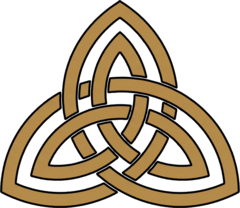
The triquetra (Latin: “three-cornered”) appears across early Celtic art, most famously in the illuminated pages of the Book of Kells, where its interlaced arcs decorate the great gospel letters. Its power is its geometry: one continuous line forming three parts — unity expressed as trinity, eternity expressed as a knot that cannot be untied.
Across centuries it has carried many threes: earth, sea and sky; past, present and future; the sacred trinities of both pagan and Christian Ireland. The symbol outlived every single one of its meanings — which may be the most Irish thing about it.
Why a motor company wears it
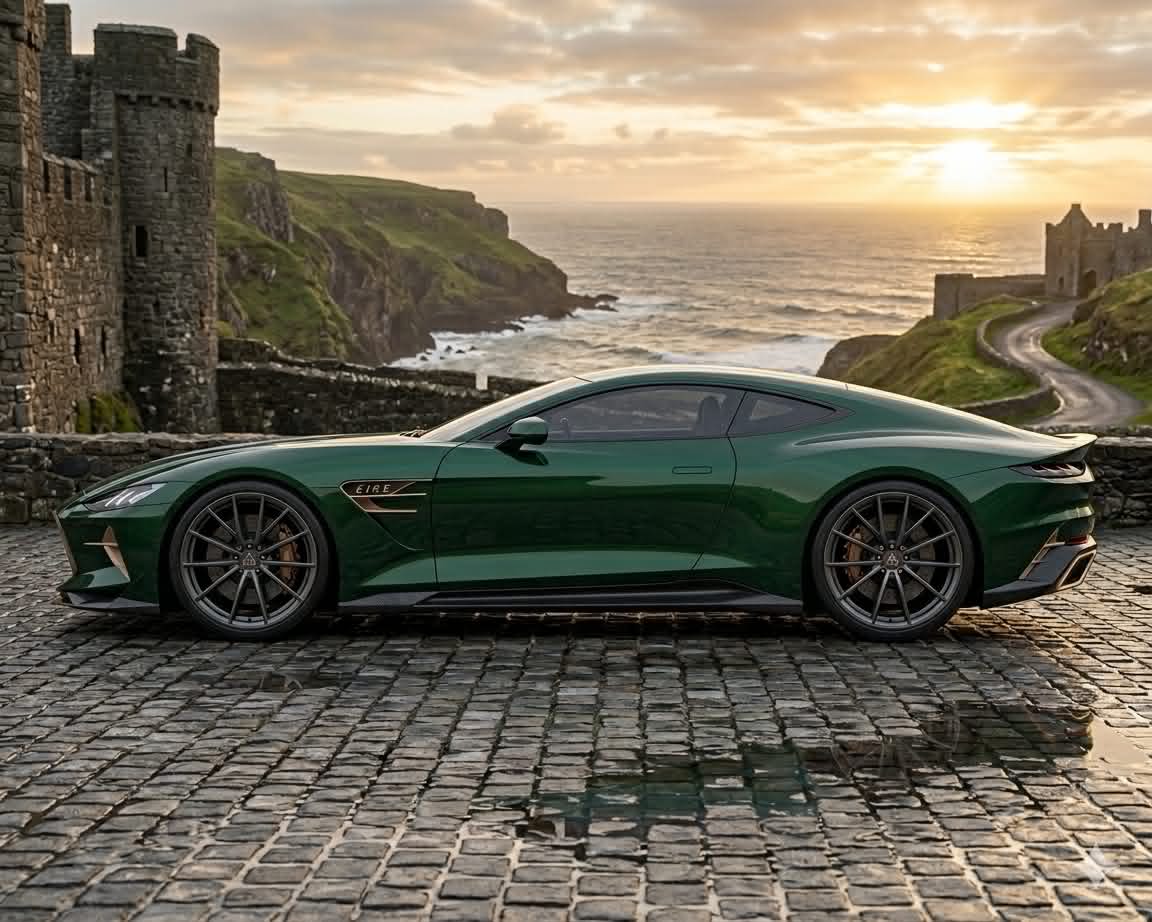
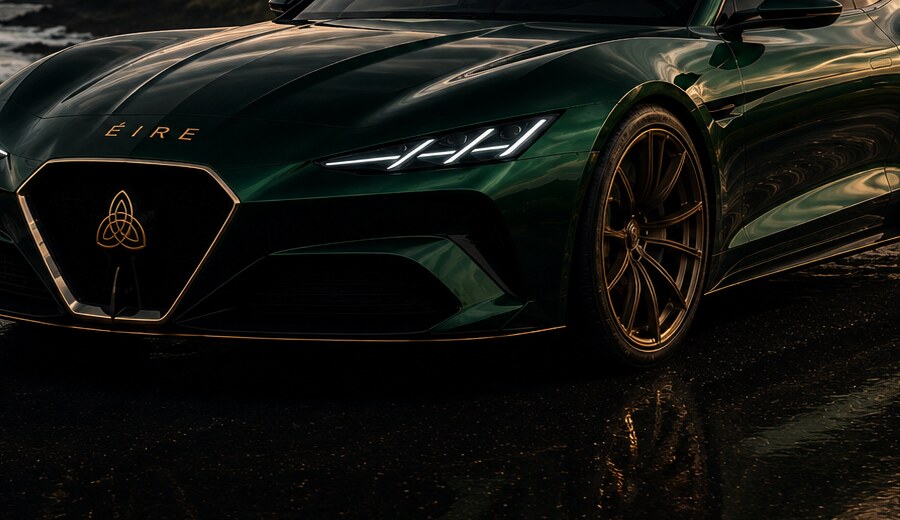
Éire Motor Company chose the triquetra as its emblem for what it is, not what it decorates: continuous, engineered, resolved — a single line closing perfectly on itself. It is craftsmanship as symbol, a thousand years before anyone drew a car.
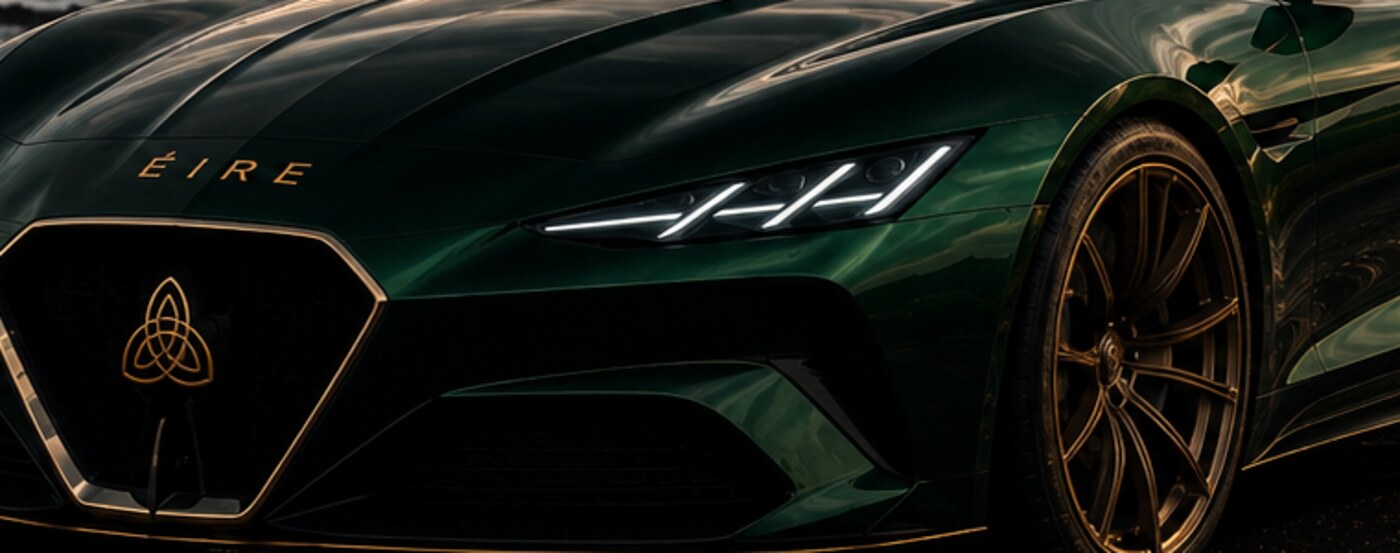
Éire renders its knot in brushed copper against deep emerald — the marque’s signature pairing — set at the centre of the grille and echoed sparingly through each car. Used deliberately, never repeated into wallpaper: one ancient line, carrying a modern marque.