The frame is the body
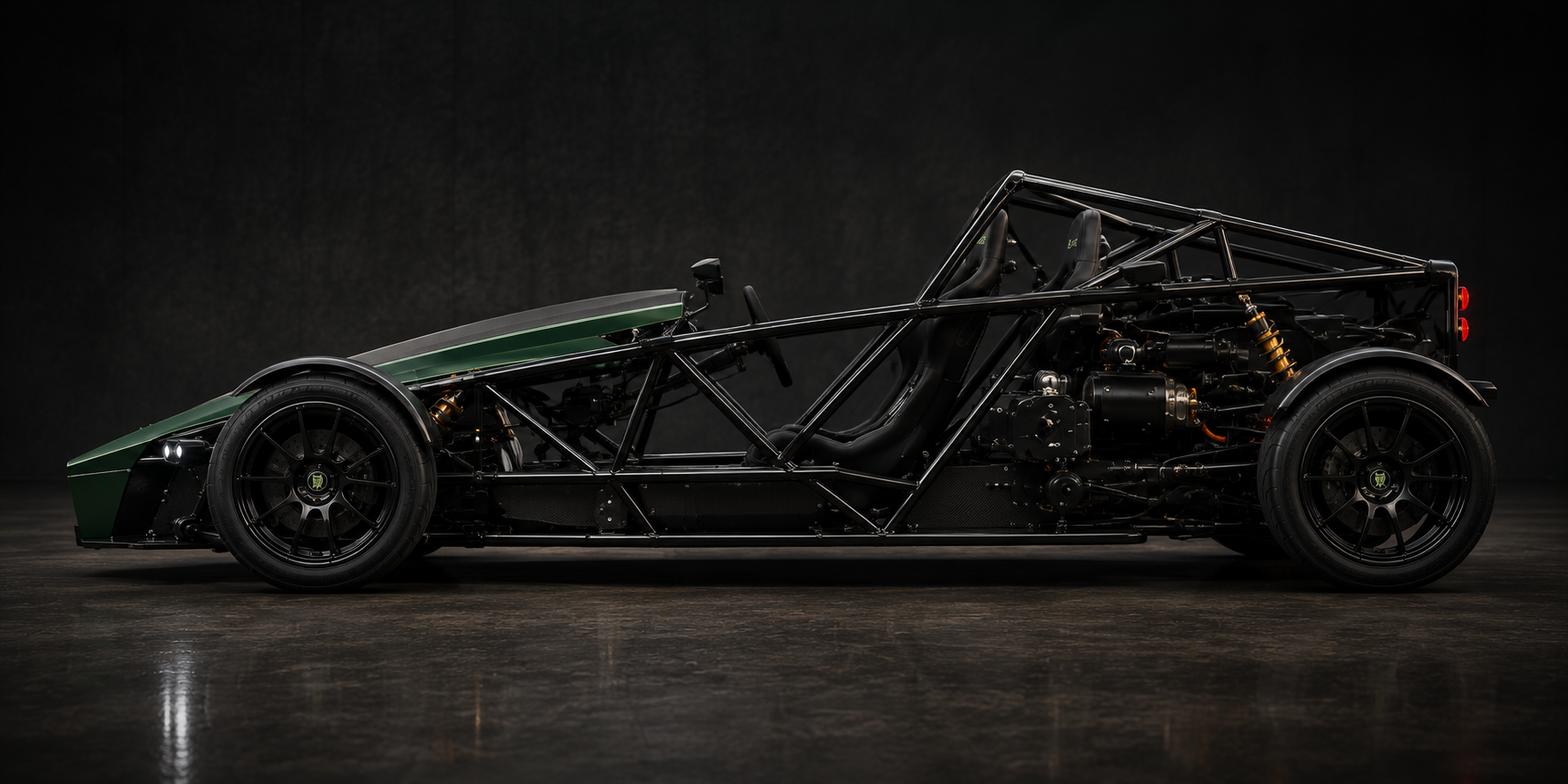
An exoskeleton car is built around a visible structural frame — usually welded steel or bonded aluminium tube — that serves as chassis, safety cell and exterior design all at once. There is no bodywork to hide behind. Where a conventional car clothes its engineering, an exoskeleton car exhibits it.
The approach was made famous by the Ariel Atom, whose exposed tubular frame became one of the most recognisable silhouettes in performance motoring, and it defines a small, uncompromising breed: minimal weight, maximal sensation, nothing between the driver and the machine.
Why build a car this way?
Weight, first. Body panels, sound insulation and trim are heavy; deleting them is the purest diet in car design. Exoskeleton cars routinely weigh less than half of a modern sports car, which transforms acceleration, braking and agility more honestly than any horsepower figure.
Honesty, second. Because the structure is visible, it must be beautiful — every tube placed with intent, every weld a signature. The engineering cannot be careless, because the engineering is the design.
The Éire Forge
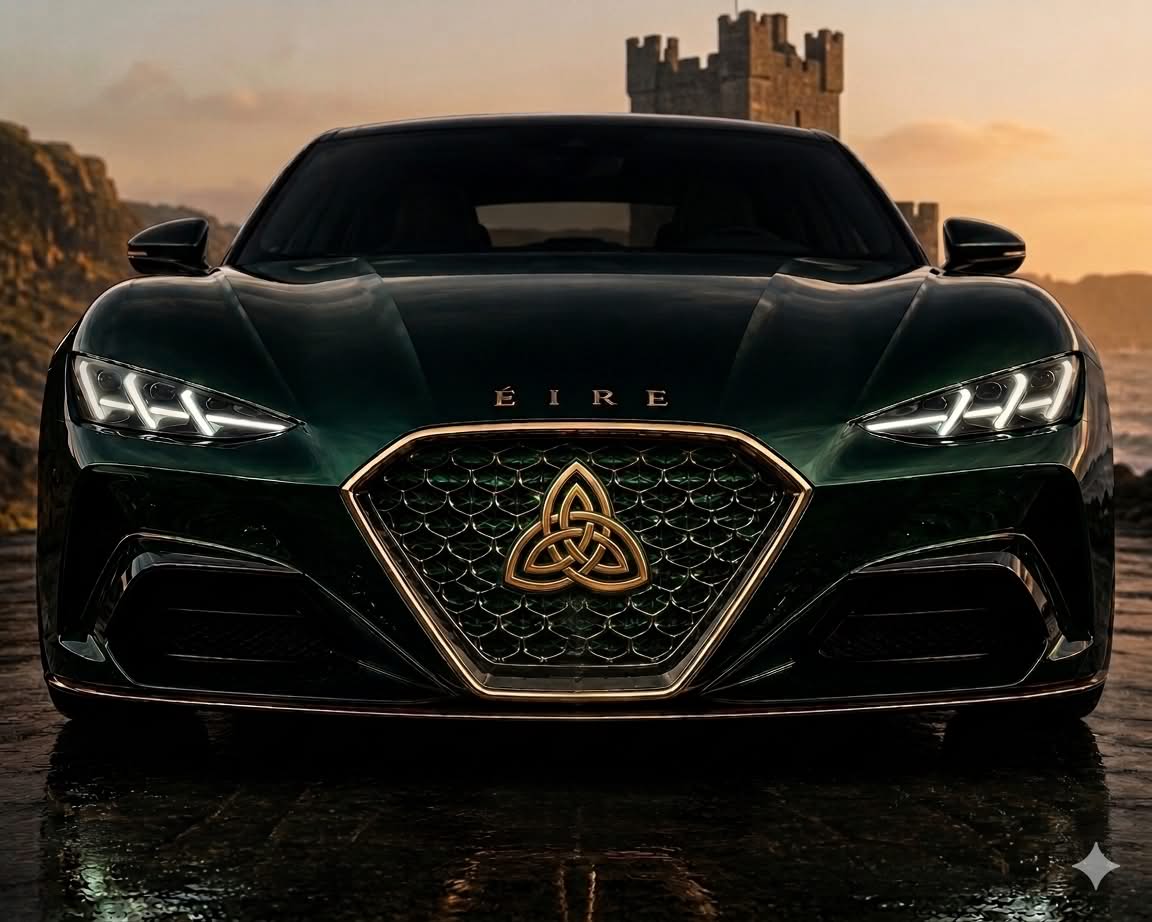
The Éire Forge is Éire Motor Company’s expression of the breed: a lightweight, all-electric open-cockpit machine whose exposed frame is finished like jewellery — deep Irish green structure, copper detail, a long boat-tail signature. It is both a track car and the company’s rolling development platform, the place where Éire proves its ideas before they reach the road cars.
Where the classic exoskeleton cars pair their frames with petrol engines, Forge pairs its structure with instant electric torque and near-silence — an open-air intensity the breed has rarely offered.