
What makes a boat-tail
A boat-tail is a rear body treatment where the bodywork narrows continuously behind the rear wheels, drawing the eye to a slender tail rather than a full-width slab. The name comes from the wooden speedboat sterns that inspired the coachbuilders of the 1920s and 30s, who grafted the shape onto the grandest chassis of the era.
The form has never left. It returns whenever a designer wants a car to look inevitable rather than styled — most famously in recent years on one of the most expensive coachbuilt motor cars ever made, which took the name literally.
Why it works on the eye — and in the air
Visually, a taper reads as motion: the car appears to be travelling even at rest, because the body resolves toward a point the way a wake does. A squared tail ends a car; a boat-tail finishes it.
Aerodynamically, gentle rearward tapering is genuinely useful — it narrows the wake a body drags behind it, which is why the shape keeps reappearing in efficiency-minded design a century after the coachbuilders drew it for beauty alone.
The Forge’s signature
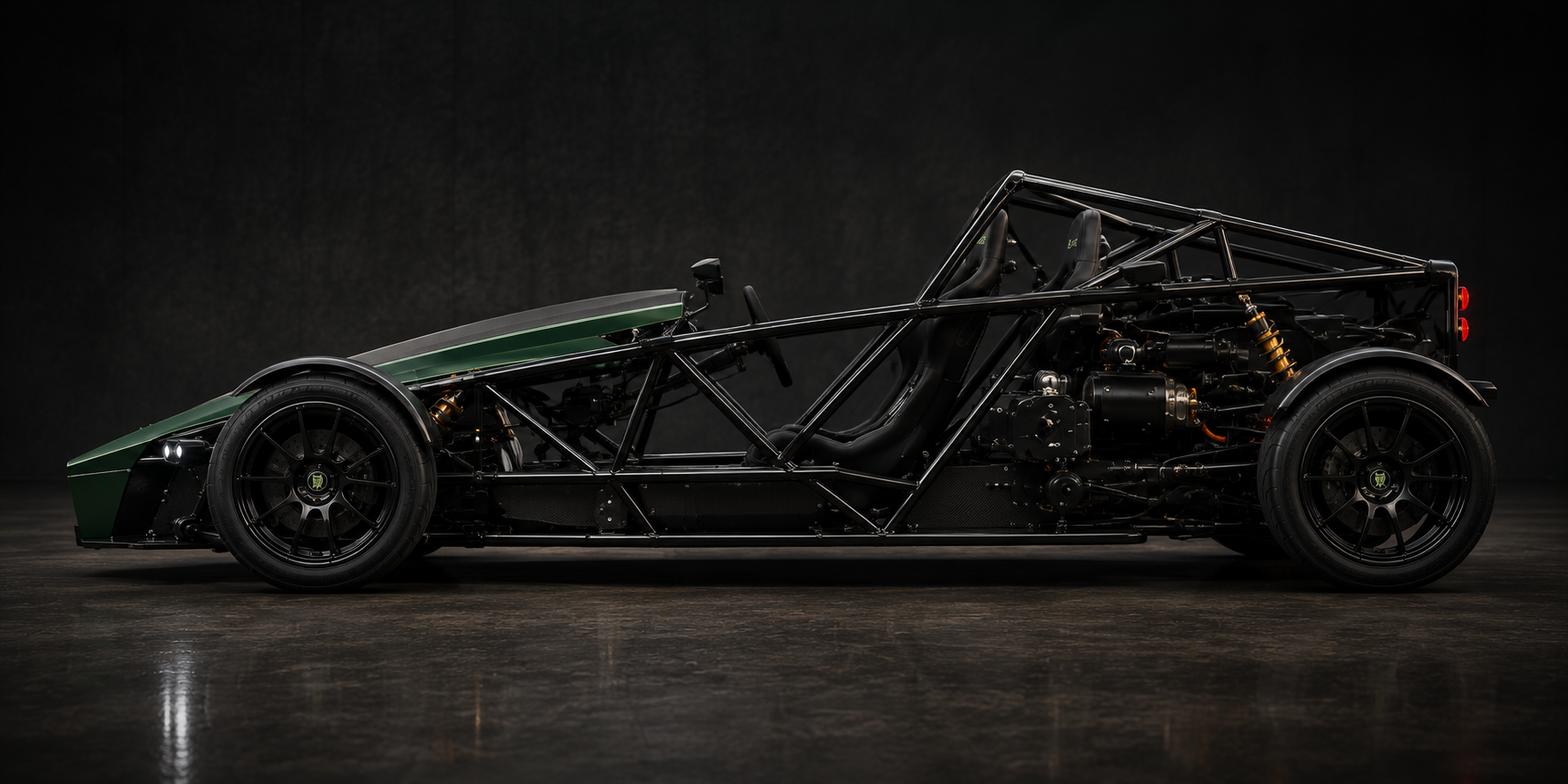
On the Éire Forge, the boat-tail is the design signature: the exposed frame sweeps inward past the rear wheels into a long, elegant taper, ending in a small squared face — a hull in steel. On a car with no bodywork to sculpt, the structure itself performs the trick, which makes it rarer still.
It is also the view most people will get of a Forge on track. Éire drew it accordingly.