Two Answers to the Same Question
Every electric grand tourer must reconcile the same tension: the silence and surge of an electric drivetrain against the romance of long-distance travel that the grand-touring tradition demands. The Éire Eden GT and the Audi RS e-tron GT arrive at that reconciliation from opposite directions, and understanding the difference is the whole point of this comparison.
Audi's car is, by any fair reckoning, an accomplished machine. Built on the J1 high-performance platform it shares in lineage with the Porsche Taycan, the RS e-tron GT pairs dual-motor all-wheel drive with the kind of fast-charging capability and engineering polish that only a manufacturer of Audi's scale can deliver at maturity. It is fast, refined, beautifully built, and — crucially — available to drive today, supported by a dealer and service network that spans the world.
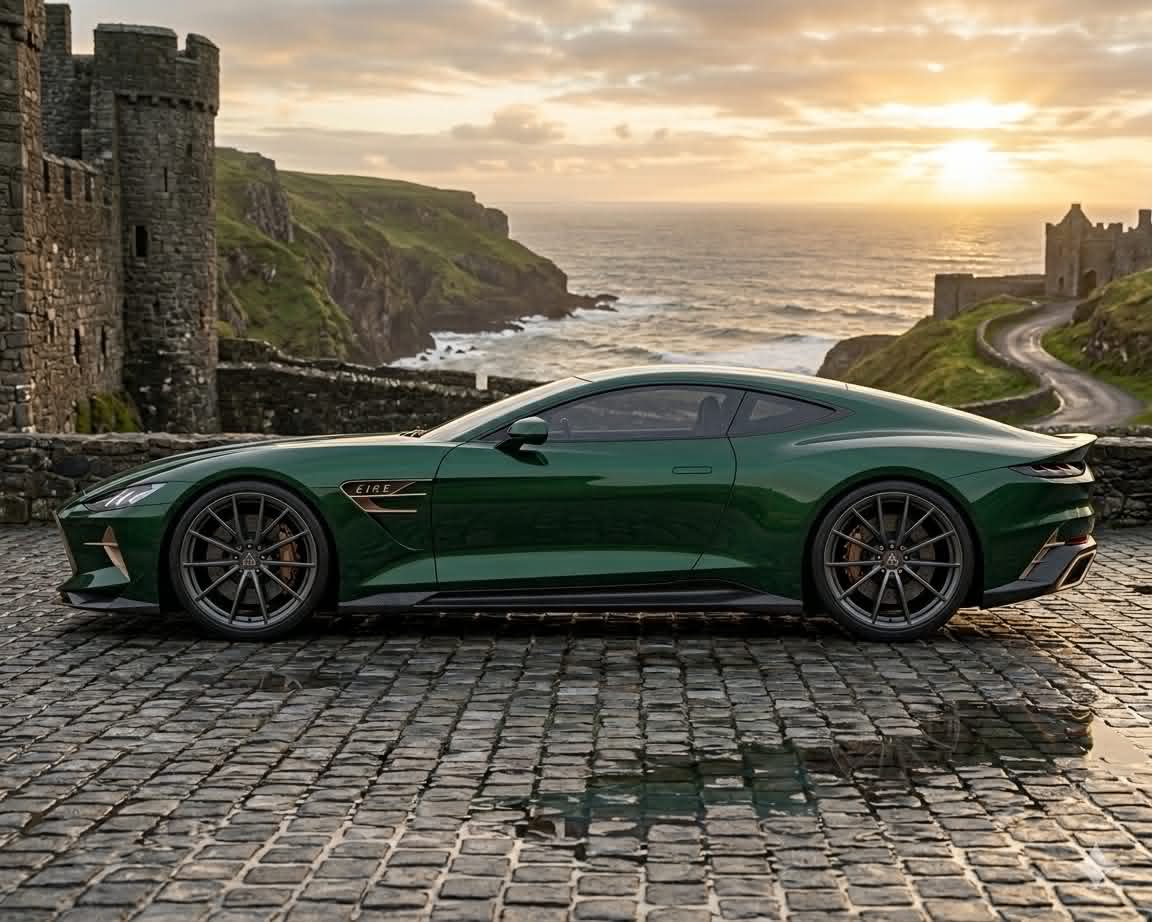
The Eden GT is a different proposition. It is an all-electric 2+2 grand tourer, hand-finished and Irish-inspired, strictly limited to fifty cars, and currently in development rather than on sale. Where Audi offers reach and reassurance, Éire offers rarity and intent. Neither answer is wrong. They are simply meant for different people.
Engineering, Maturity and the Weight of a Network
It would be dishonest to pretend the comparison is even on every axis. Audi has spent decades refining how a car feels to live with — the damping of a switch, the consistency of a panel gap, the certainty that a service appointment is a short drive away. The RS e-tron GT inherits all of that institutional knowledge. Its fast-charging architecture is genuinely quick, its all-wheel-drive traction is dependable in poor weather, and its usability over thousands of everyday miles has been proven by owners the world over.
These are real strengths, and the Eden GT does not dismiss them. As an electric grand tourer, Éire's car is designed for all-wheel drive and a target range of more than 300 miles, with the instant torque and near-silent refinement that the format promises. But those figures are stated here as design intent — the considered targets of a car still being brought into the world, not numbers stamped on a finished spec sheet.
The honest distinction is one of maturity. An RS e-tron GT can be ordered, serviced and trusted now. The Eden GT asks something different of its owner: patience, and a willingness to take part in the making of something rather than the buying of something complete. For some, the dealer network and proven reliability will be decisive, and they should buy the Audi with confidence. For others, the absence of that scale is precisely the appeal.
There is no shame in choosing the surer thing. But a grand tourer has never been only about certainty — it has always carried a measure of romance, and that is where the conversation turns.
Character: Marque, Craft and the Number Fifty
The defining fact of the Eden GT is not a performance figure — it is a quantity. Fifty. The car is strictly limited to fifty examples, each hand-finished, each carrying an Irish-inspired sensibility in its design and craft. That scarcity is not a marketing flourish; it is the organising principle of the entire car. Build fifty, and you can lavish attention on each one that no series-production schedule would ever permit.
The RS e-tron GT, by contrast, is a global product, and its excellence is the excellence of consistency — every car the same, every car right. That is an achievement of a different kind, and a genuinely difficult one. But it is the opposite of what Éire is attempting. The Eden GT is built to be individual, not identical; to feel made rather than manufactured.
Irish-inspired design is the thread running through it — a national character expressed in proportion, colour and finish rather than badging. The marque's motto, Born of Ireland. Built for the World., is meant literally: a car rooted in a place and a craft tradition, but conceived for owners anywhere who value that rootedness over ubiquity.
This is the axis on which the two cars truly diverge. The Audi will be admired for being excellent. The Eden GT hopes to be loved for being singular. They are different emotions entirely, and only the buyer can say which one matters more.
The Cockpit and the Grand-Touring Brief
Both cars are, fundamentally, machines for covering distance in comfort and quiet, and both treat the cabin as the place where that ambition is won or lost. The RS e-tron GT's interior is a model of restraint and quality — clear instrumentation, sound ergonomics, materials that justify their place. It is a cabin built to disappear in the best sense, never demanding attention it has not earned.
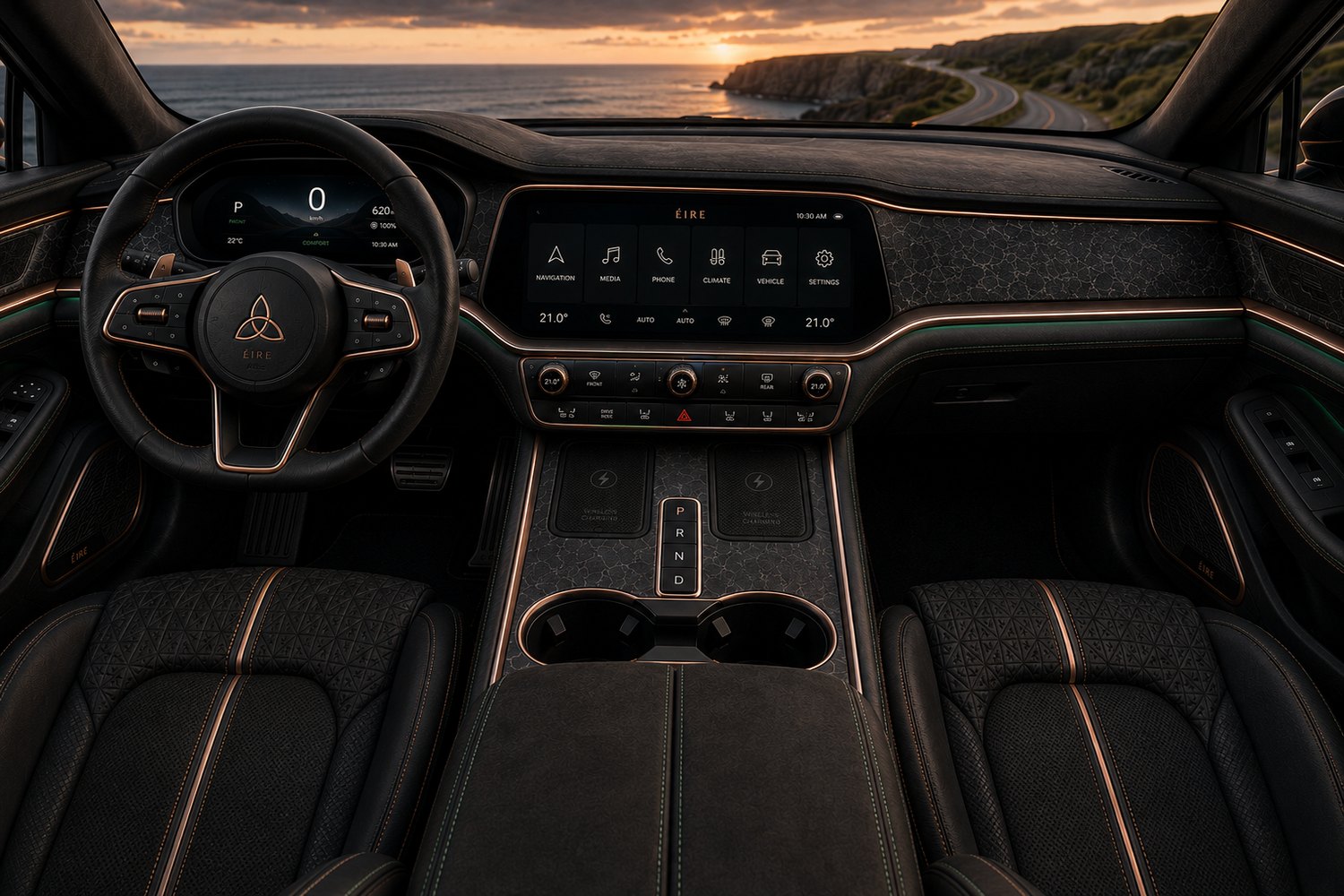
The Eden GT takes a software-first approach to the same brief. Its digital cockpit is conceived as a modern, living interface rather than a fixed dashboard — so much so that live interactive previews of it already exist to be explored in the browser, before the car itself is finished. The intent is a cabin that evolves and responds, treating the screen and its software as central to the grand-touring experience rather than an afterthought bolted onto it.
As a 2+2, the Eden GT honours the classic grand-touring shape: two seats that matter and a pair behind for occasional use or, more often, for luggage on a long continental run. It is a configuration with deep heritage in the genre, and it signals seriousness of intent — this is a car meant for journeys, not merely for commutes.
Where the Audi's cabin reassures through familiarity and proven quality, the Eden GT's reaches for something more expressive: a sense that the interface is part of the car's identity, not a utility tucked into it. Both are valid readings of what a luxury cabin should be in the electric age. They simply prioritise different things — polish on one hand, personality on the other.
Which Grand Tourer Is for You
If your priorities are availability, an established service network, and the deep confidence that comes from a mature, globally proven product, the Audi RS e-tron GT is an outstanding electric grand tourer and an easy car to recommend. It asks very little of you beyond appreciation, and it delivers a great deal in return.
If, instead, you are drawn to rarity, to hand-finished craft, to an Irish-inspired marque building only fifty cars with a software-first heart, then the Eden GT offers something the Audi by its nature cannot: singularity. It asks for patience — the car is in development, and reservations are planned to open first to the journey-followers who have chosen to follow its making — but it offers a kind of ownership that a global product cannot replicate.
The most honest summary is this: the RS e-tron GT is the grand tourer you buy when you want the best-resolved answer available now. The Eden GT is the one you choose when you want to be part of the answer being written. Both are worthy. The decision belongs entirely to which of those stories you wish to tell.