What the Forge is for
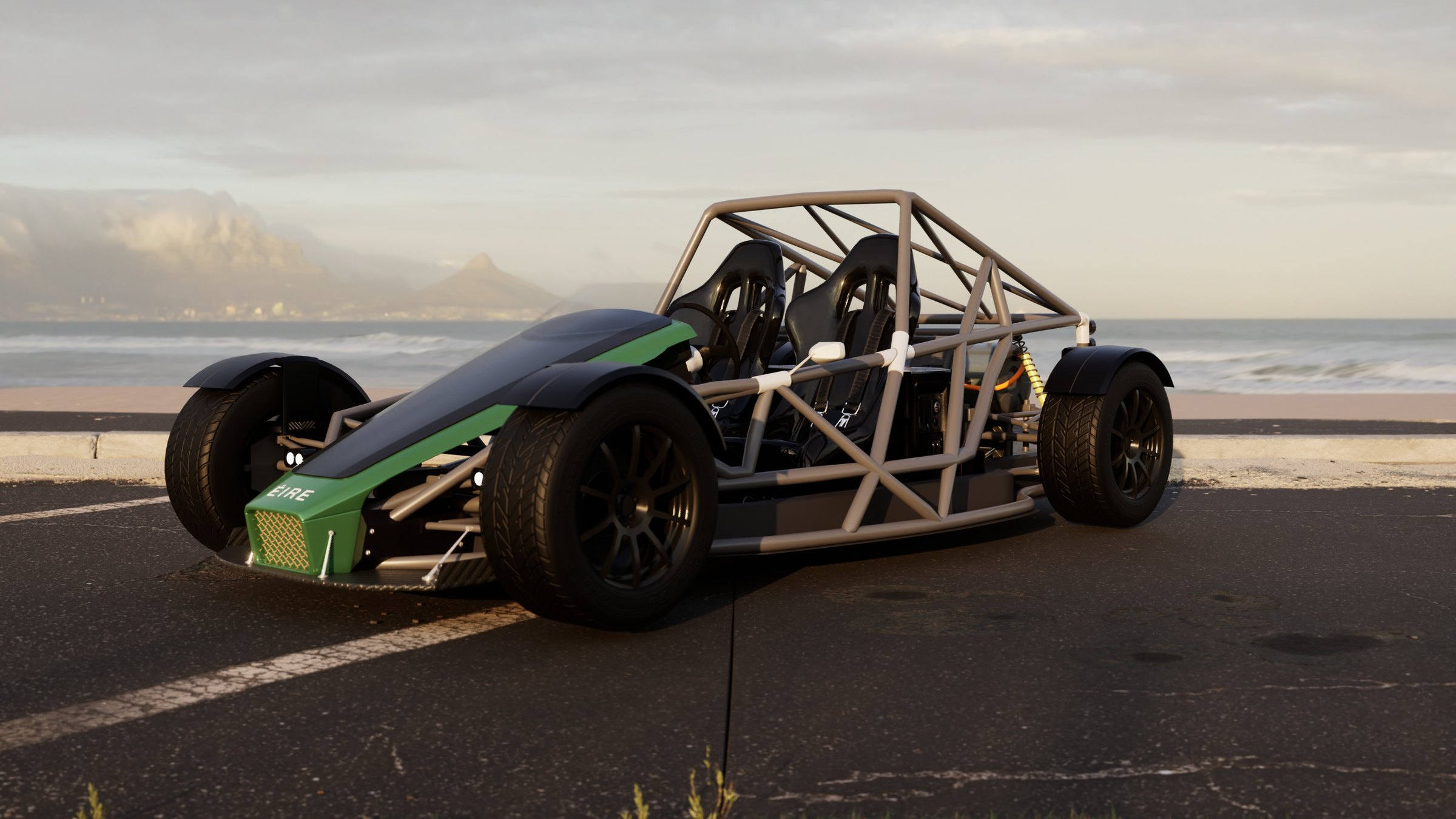
The Forge Mk I is the first Éire vehicle that will reach the road, and it is not the flagship. It is an all-electric, lightweight, open exoskeleton car: a visible tubular structure that is chassis, safety cell and exterior at once, with two seats inside it, four wheels at its corners, and almost nothing else. It is the car the company learns on. Every system we intend to put into an Éire road car gets proven here first, in the open, where mistakes are cheap and visible.
That purpose shapes how it looks. There is no bodywork to hide a compromise behind. If a tube is in the wrong place, you can see it. If the proportions are wrong, a photograph will tell you before a test driver does. Which is the real reason these pictures exist.
The studio set
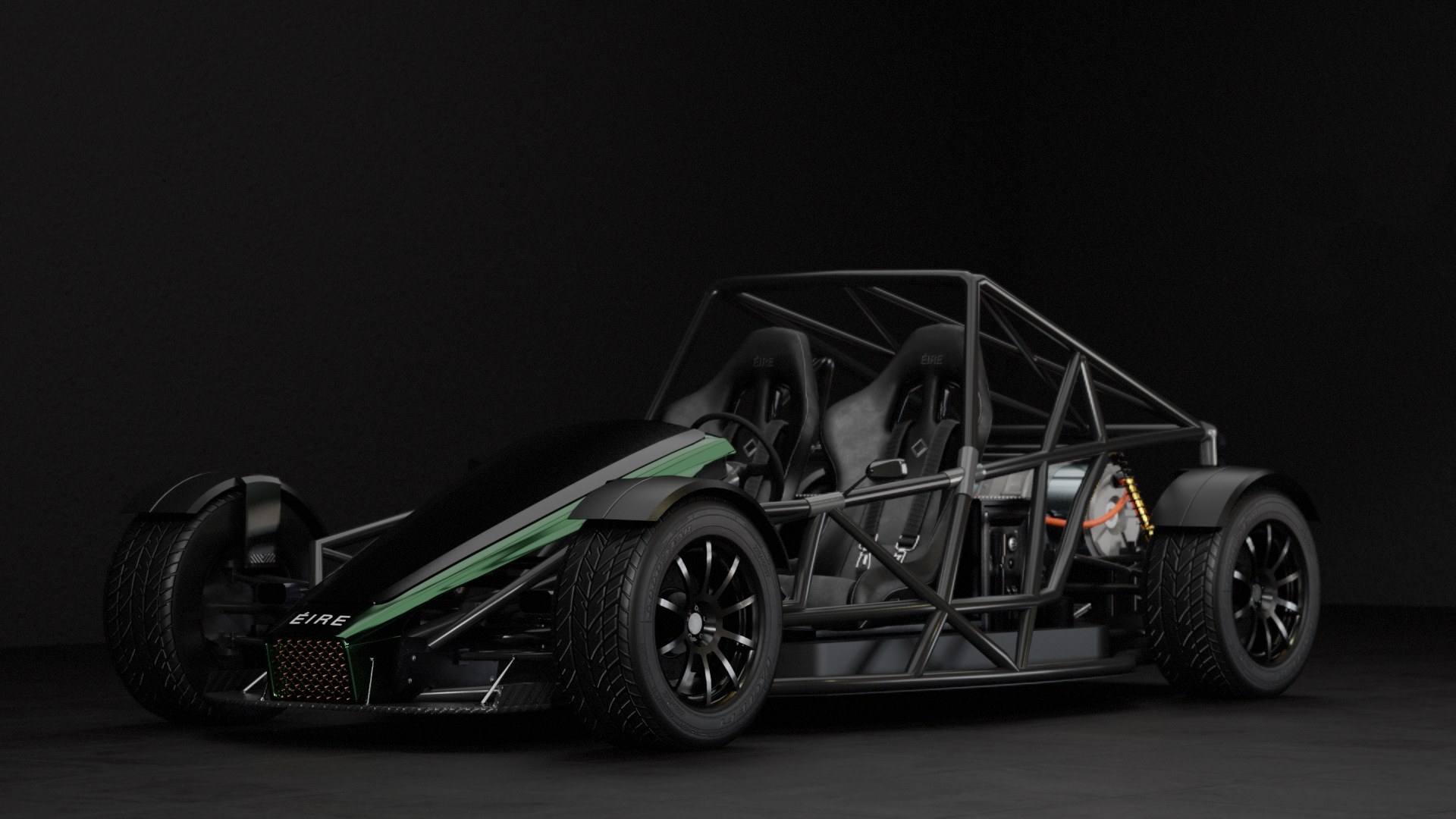
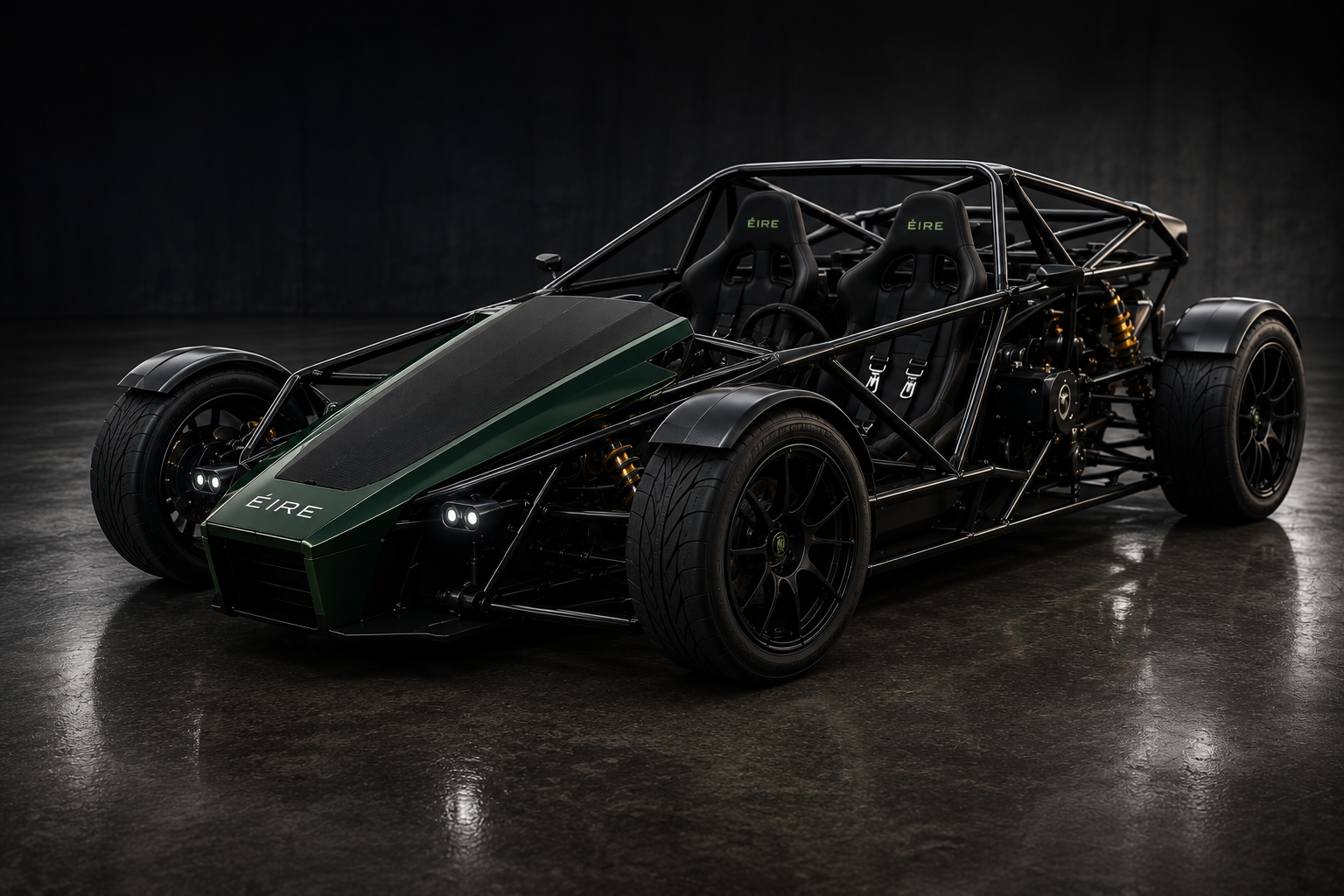
The studio set is lit from a single soft source overhead against a black backdrop, and it was done deliberately to be unflattering. Hard, directional light does one job well: it finds every change of surface and reports it. On the Forge there are only a few surfaces to find, so each one has to earn its place.
The first is the nose. It is a long, low wedge, black with a single green blade running down its spine from the scuttle to the grille, and in the studio light that blade reads as the only line of colour on the car. The light rakes along it and shows that the surface is simple — one sweep from the cockpit to the mouth, no creases for the sake of creases. The second surface is the set of four cycle wings over the wheels, which catch the light as four separate arcs and define the width of the car more than anything else does. The third is the frame itself, which in the studio set is finished dark and mostly disappears, leaving the tubes as thin highlights where the light touches the top of each one.
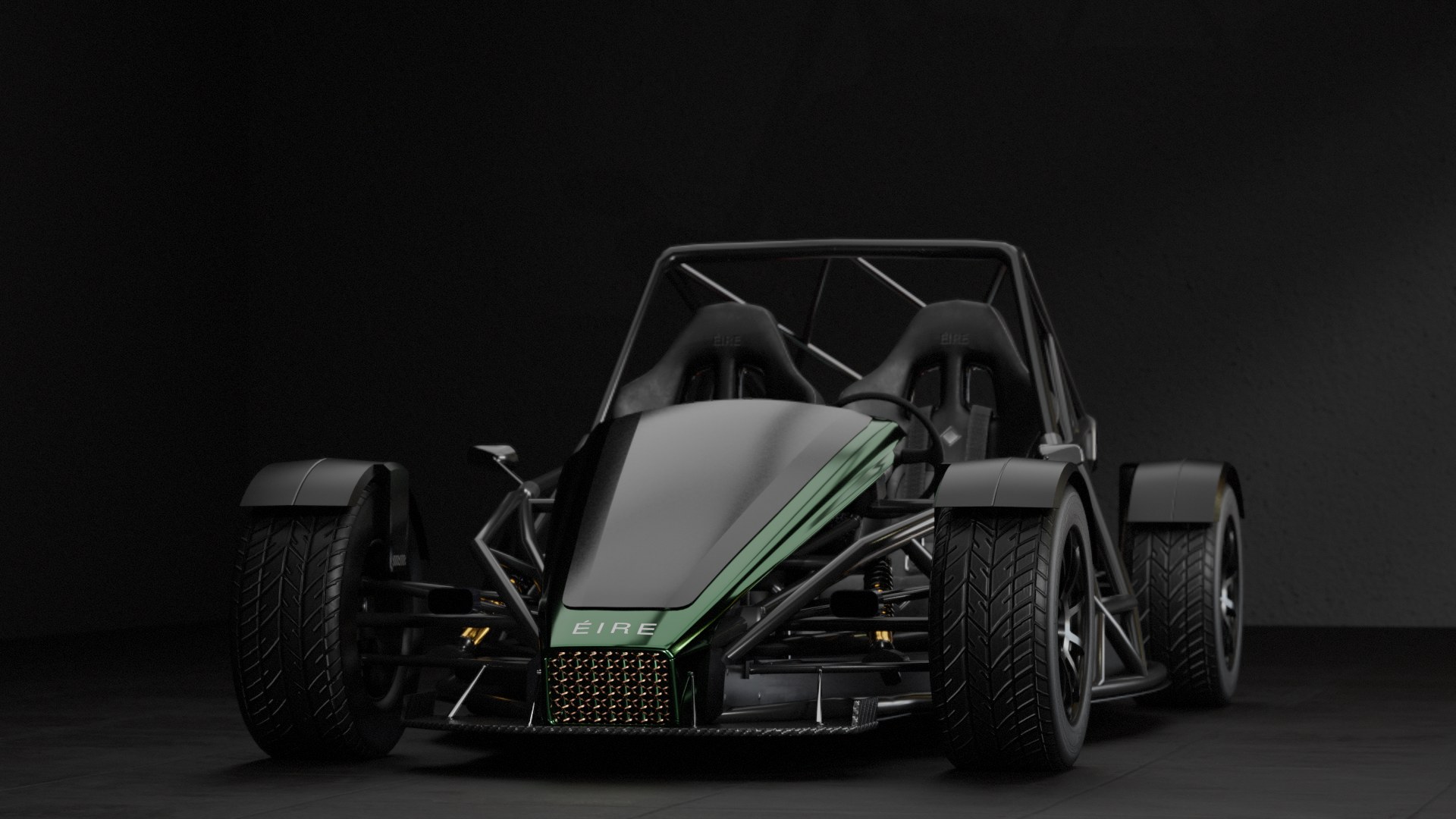
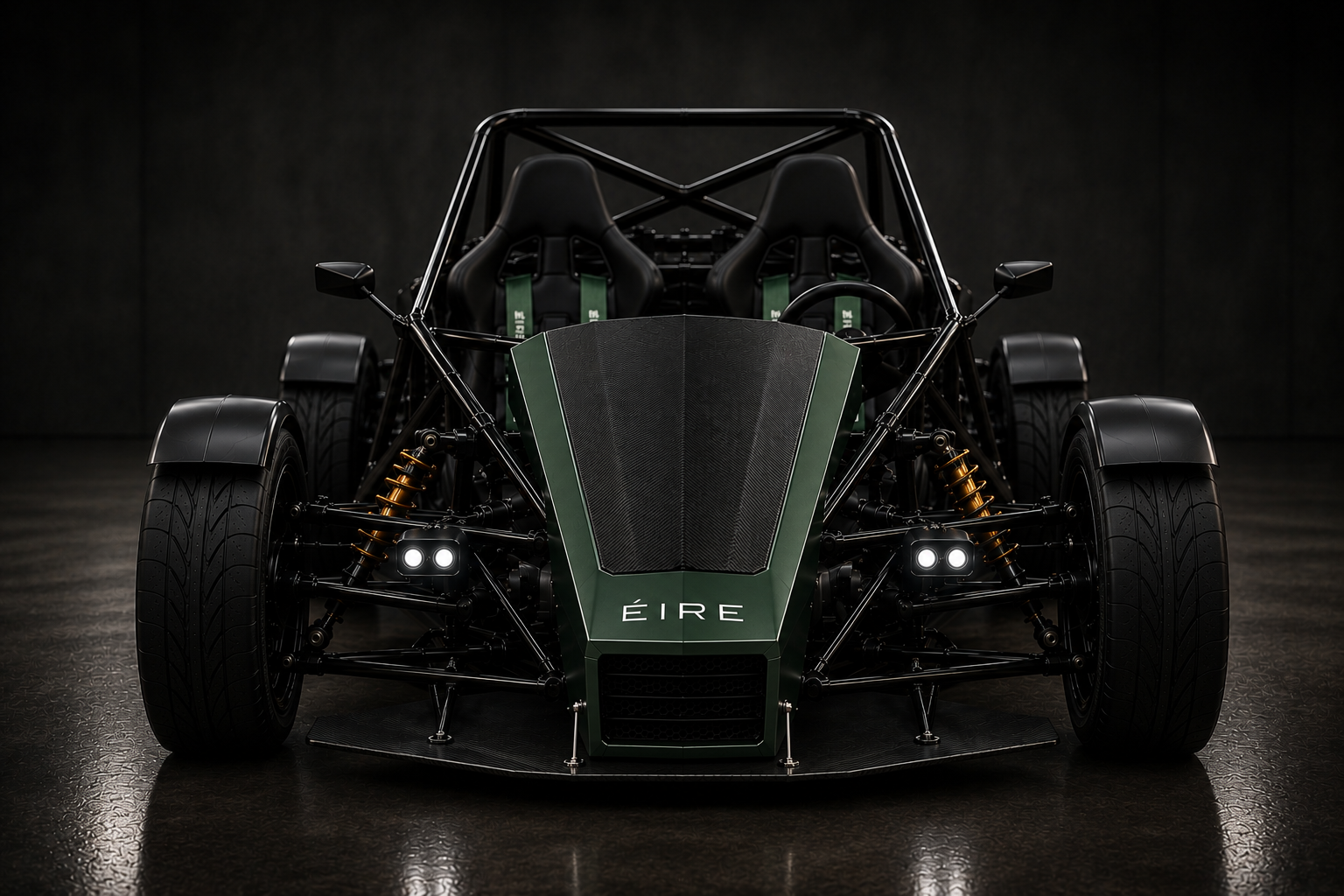
The low front view is the one we kept returning to. From road height the Forge is wheels, nose and wings, and the structure sits entirely inside the width of the tyres. The copper mesh in the grille is the one warm note against all that black and green, and it was placed there on purpose: the first thing the car presents is the mark of the company, not an air intake pretending to be a face.
The coast set
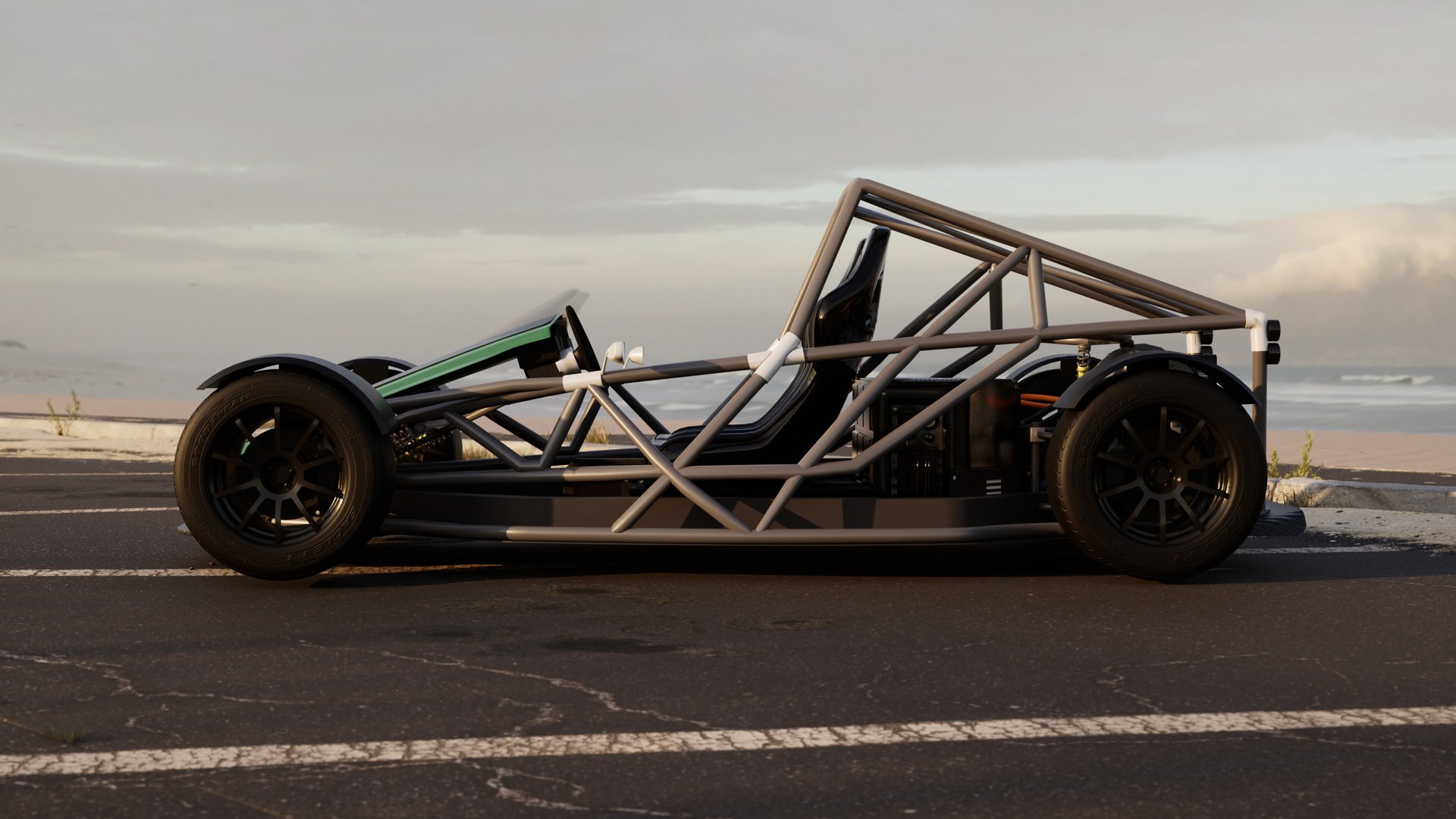
The coast set is the opposite exercise. Flat daylight, a sea-level road, long shadows late in the day. Where the studio reveals surfaces, daylight reveals proportion, and proportion is the thing a development car most needs to get right before anything else is settled.
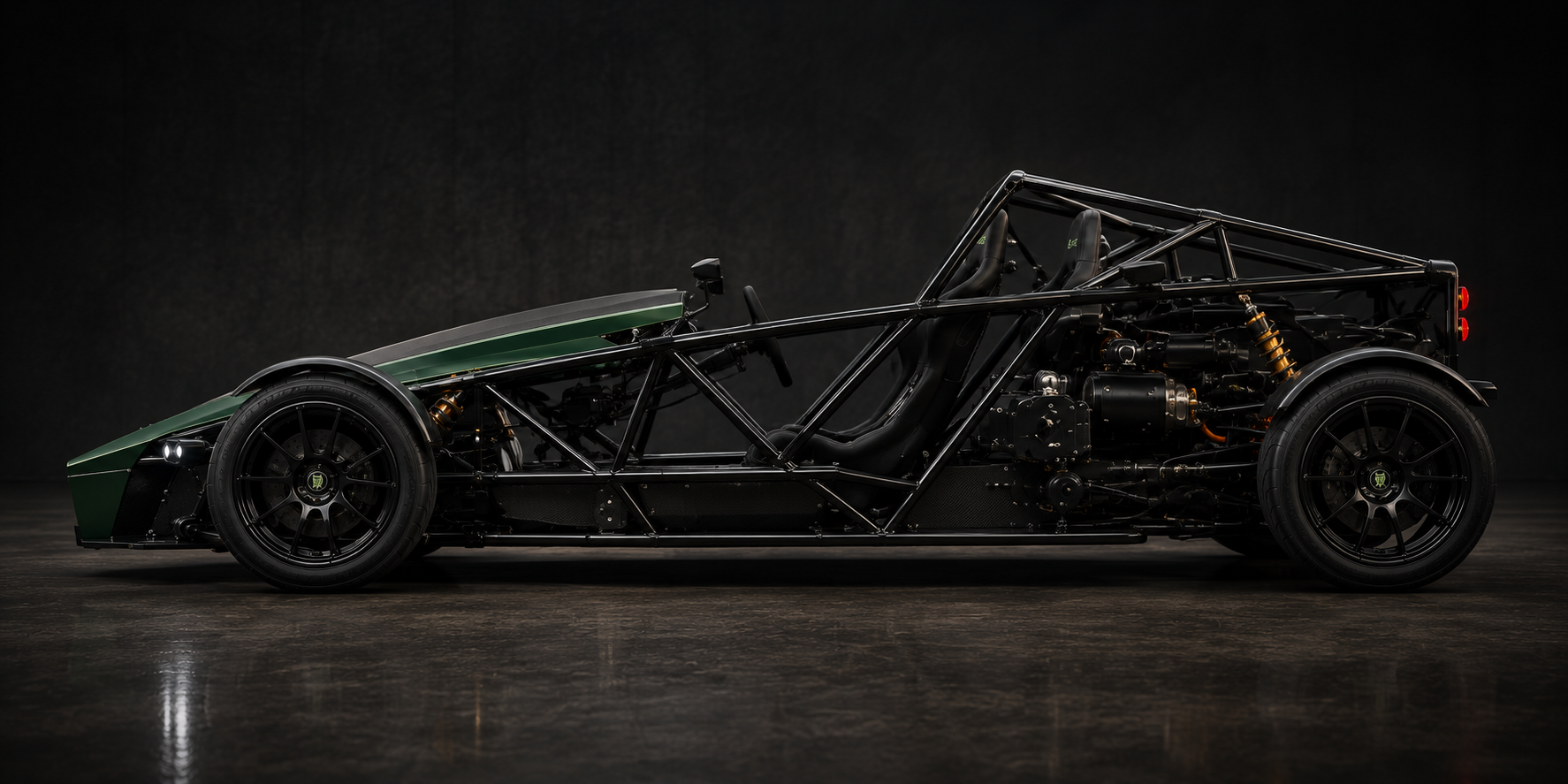
In profile the Forge reads as what it is: a long wheelbase for its length, the cockpit set well back, the mass of the car — the seats, the hardware behind them — sitting low between the axles. The nose runs down and forward from the scuttle in one line, and the roll hoop rises behind the seats and falls away to the rear in a second line that mirrors it. The frame between them is an open truss, and in daylight you can trace every member from the front suspension pickups to the rear. Nothing in the side view is decoration. If a tube were removed, the shape would change.
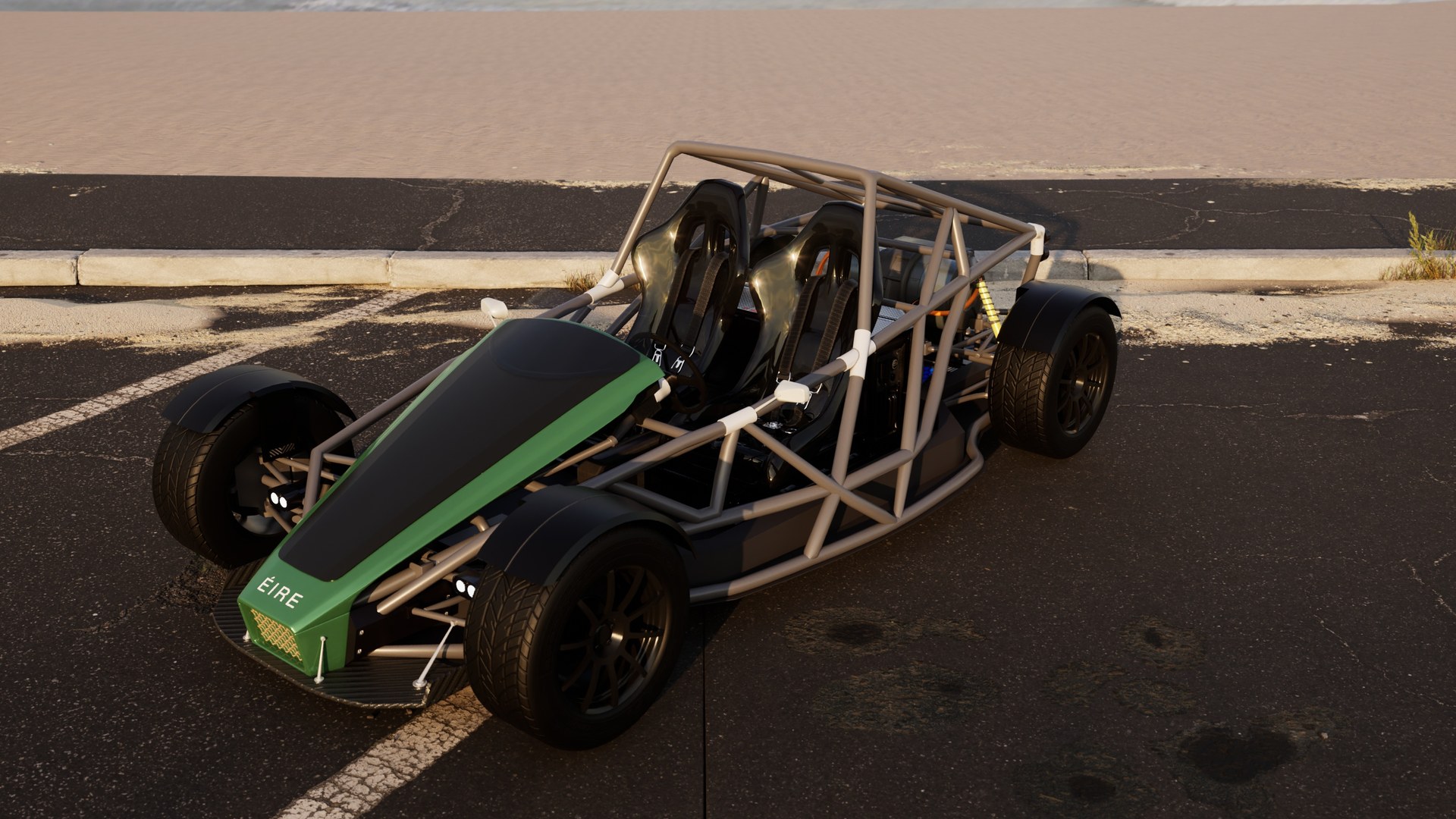
From above, the plan view does something the side view cannot. The car is narrow at the nose and opens out to the full width of the cockpit and the rear track, so the green blade on the nose becomes an arrow pointing the way the car wants to go. The stance is square: the wheels fill the arches and sit at the corners, which is the simplest honest claim a car can make about how it intends to handle.
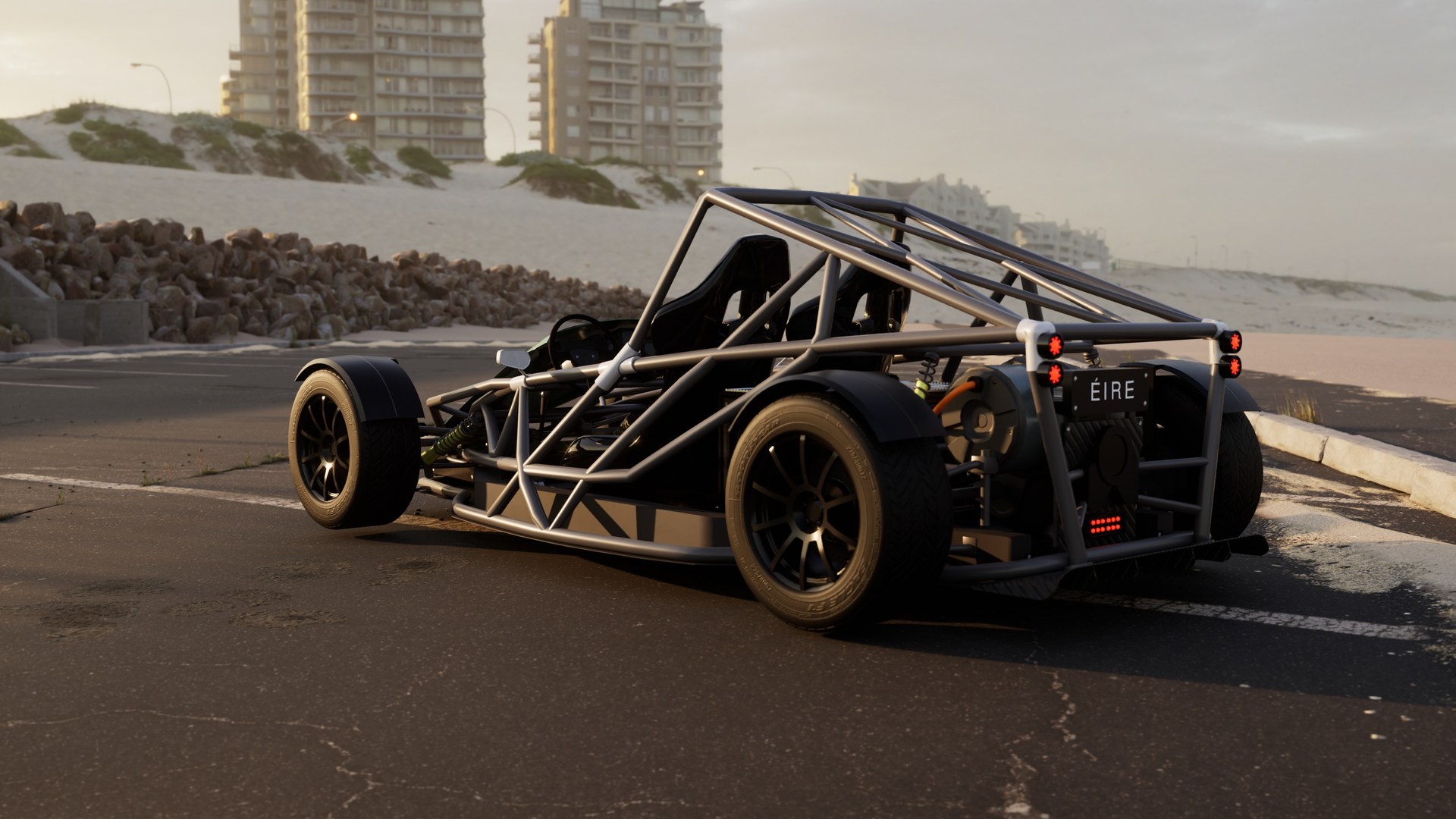
The rear three-quarter is the view most cars are designed to hide, and the Forge cannot hide it. The tail is the end of the frame, the drive hardware between the rear wheels, a plate with the name on it and the lamps. It is the least styled view of the car, and we think it is the most honest one.
The details
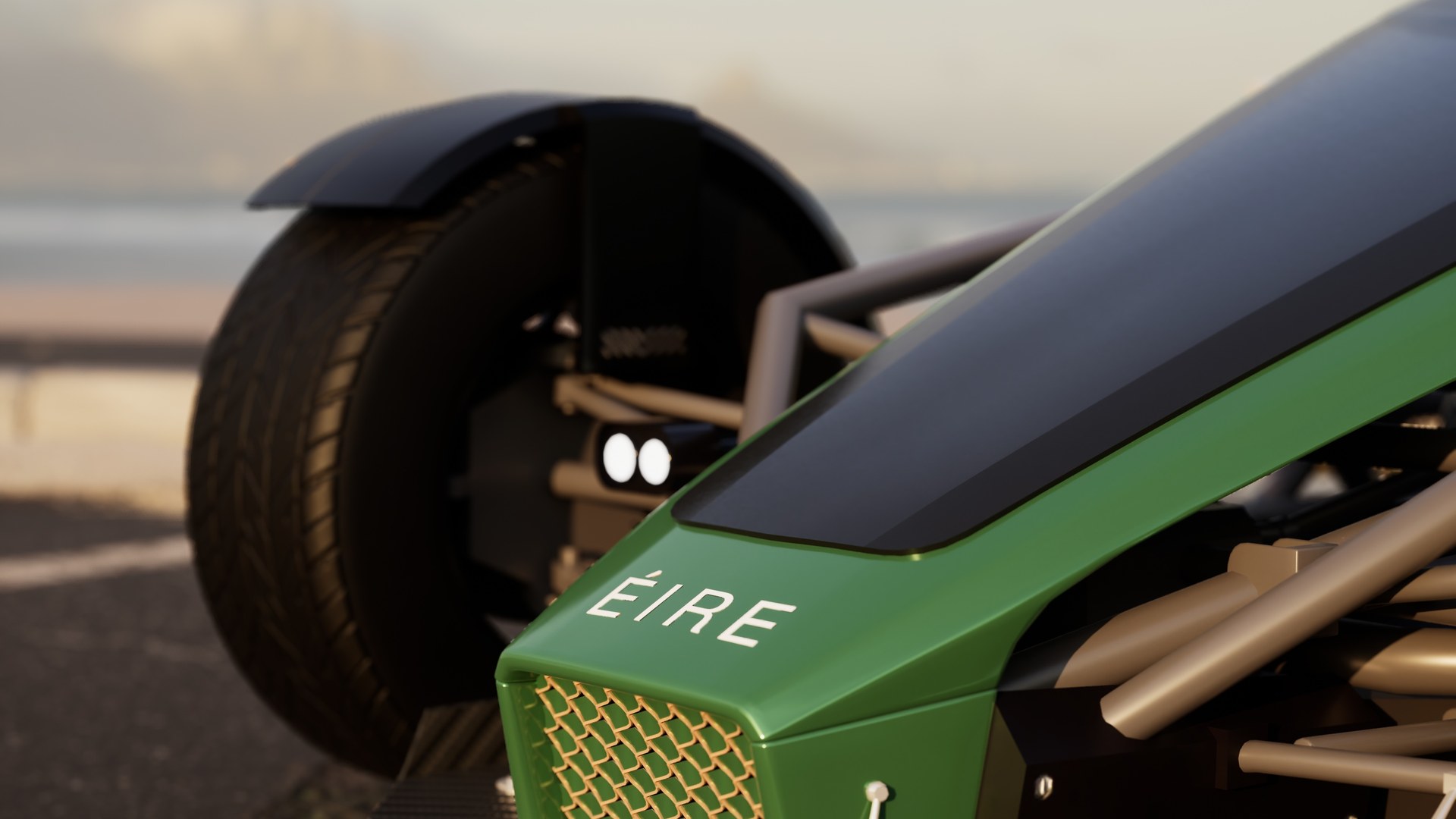
Two details carry most of the car’s identity, so we photographed both close. The first is the nose. The green blade ends in the raised ÉIRE lettering, with the fada where it belongs, and directly beneath it the copper mesh of the grille. Green and copper are the two colours of the marque and they meet here, at the one place the car presents itself to the road. Behind the nose, the front suspension is in plain view, along with a pair of small round lamps mounted to the frame. There is no attempt to integrate them into a surface; there is no surface to integrate them into.
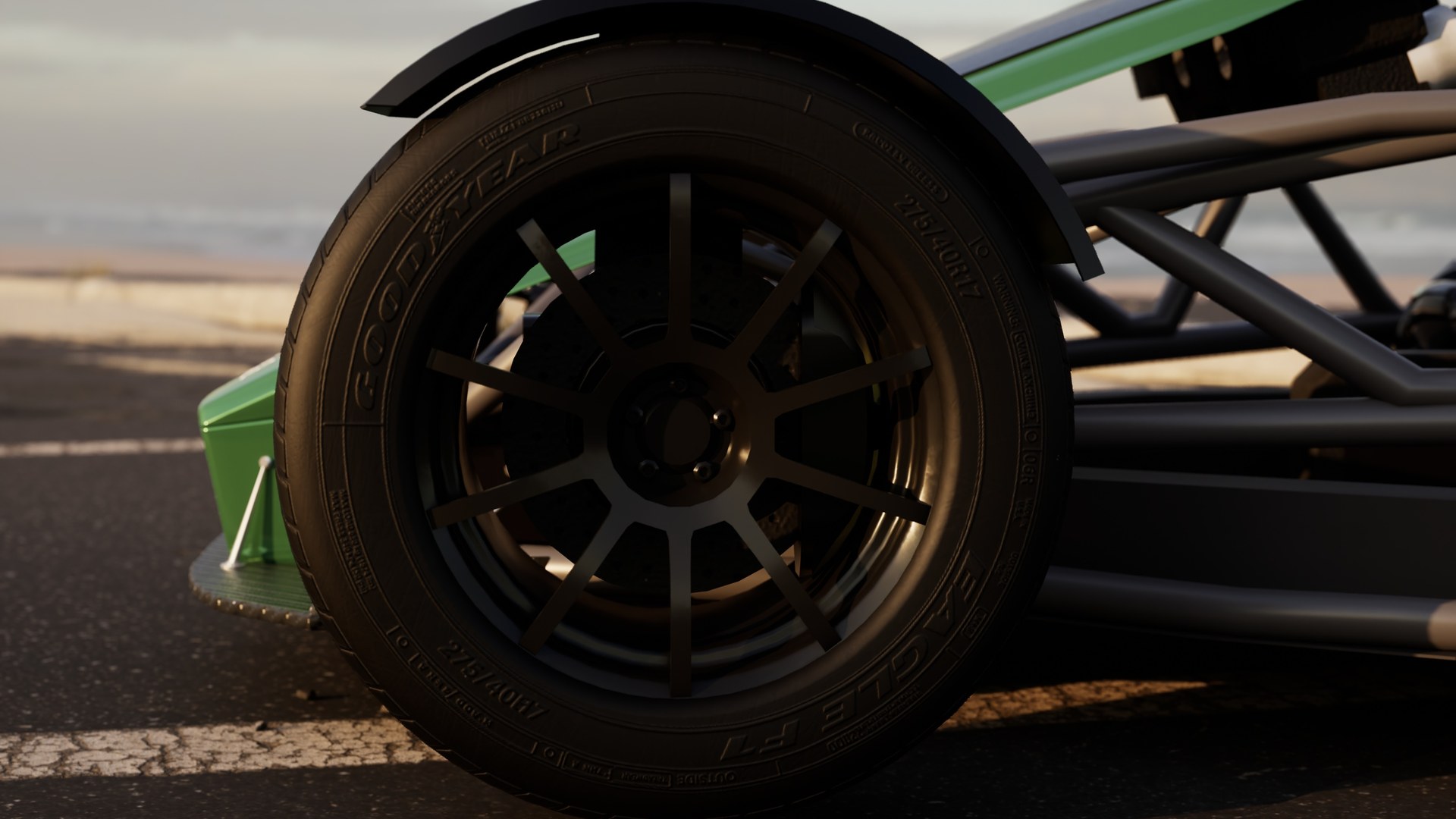
The second is the wheel. It is a plain multi-spoke design in a dark finish, chosen so that the brake behind it is visible and the tyre is the widest element of the corner. The cycle wing above it is a single curved panel that follows the tyre, separated from the body because there is no body to attach it to. The detail photograph shows something the wide shots do not: how much of the car is simply wheel. On an exoskeleton car the tyre is the largest single surface you will see, and it is the one that does the most work.
Why photograph an engineering model
The usual practice is to photograph a car when it is finished, lit and polished, with the development hidden behind it. We are doing it the other way round, and there are two reasons.
The first is honesty. The Forge exists today as an engineering model, and the photographs say so. A photograph of a development car should look like a development car.
The second is iteration. Photographs are a tool, not a reward. Setting the model in a dark studio and then in flat daylight is how we check the car against itself from angles a screen does not naturally give you. The profile view told us things about the line of the nose. The high three-quarter told us things about the width of the rear track. Some of those things will change the car. That is what the photographs are for, and publishing them means the people following the company can see the same car we are looking at, at the same stage, rather than a finished story told afterwards.
There is a third reason, which is simpler. We said from the start that Éire would build in the open. These pictures are what that looks like in practice: not a reveal, just the current state of the work, photographed well.
What the photographs say about the road ahead
They say the shape is close. The proportions in the daylight set — wheelbase to length, hoop to nose, track to width — are the ones we intend to keep, and the surfaces in the studio set are the ones we intend to finish. What remains is the work that photographs cannot show: the systems inside the frame, the software that binds them, and the long process of making an electric exoskeleton car behave as well as it looks standing still.
They also say what the Forge is not. It is not the Eden GT, and it is not trying to be. It is a small, open, lightweight car whose whole purpose is to teach the company how to build the cars that follow it. When the Forge reaches the road, it will have been photographed a great many more times, in a great many more states, and we intend to publish most of them. This is the first set. It will not be the last.