
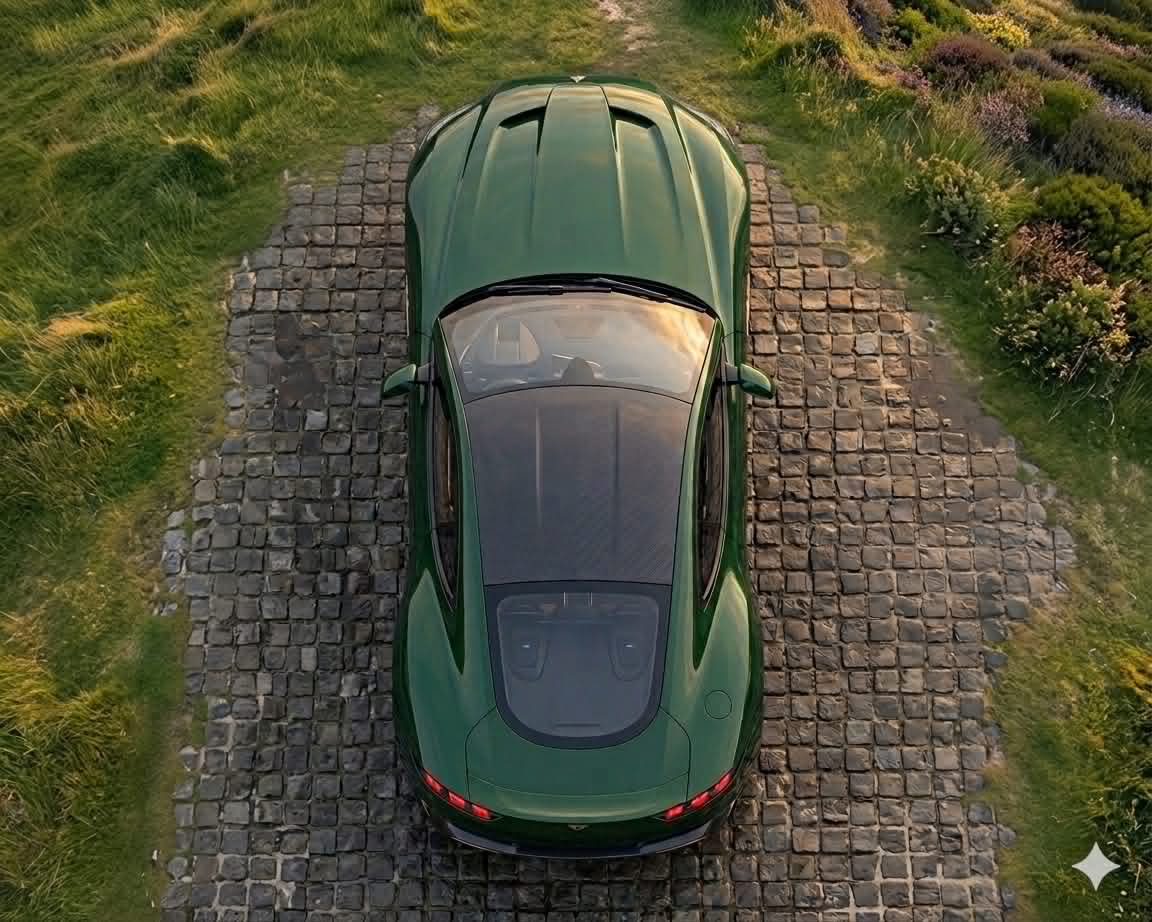
Dash-to-axle: the aristocrat’s measurement
The distance between the front axle and the base of the windscreen is design’s oldest status symbol. A long dash-to-axle pushes the cabin rearward over the driven wheels — the silhouette of classic front-engined grandeur. Grand tourers live on this proportion; it is why an Eden GT or a DB-anything reads as noble in pure profile.
Wheelbase, overhangs and stance
A long wheelbase with short overhangs plants the wheels at the corners, where they look confident; long overhangs read as afterthought. Stance — how the body sits over the track width — separates cars that grip the road visually from cars that merely rest on it.
The greenhouse ratio
The proportion of glass to body decides a car’s character at a glance: tall glass reads friendly and practical; a shallow greenhouse over high body sides reads powerful and expensive. Sports and luxury design has drifted steadily toward the latter — presence through mass, lightness through line.
Once you see these five relationships, you cannot unsee them — and you will know in half a second why some cars look inevitable. The best design happens before the details: in the proportions, where a car is either right or it never will be.