The Quiet Logic of the Strictly Limited Run
There is a particular kind of object that exists in small numbers not by accident but by intention. A strictly limited-production car belongs to that lineage. When a marque announces that it will build only a few dozen — or a few hundred — examples of a motor car, it is making a promise as much as a constraint. The promise is that each car will receive a measure of attention that no high-volume line could ever afford. The constraint is that, once the run is complete, no more will ever be made.
This is not a new idea. The storied houses of the grand-touring tradition have long reserved their most ambitious work for small batches: limited-run grand tourers, anniversary cars, and coachbuilt specials produced in numbers a careful person could count. The figures vary from house to house and era to era, but the instinct is consistent. The finest cars are rarely the most numerous ones, and the most numerous cars are rarely the ones people remember.
What unites these efforts is a refusal to let volume dictate vision. A car built in vast quantities must answer to averages — average tastes, average use, average tolerances. It must be designed so that the millionth example is indistinguishable from the first, which is a remarkable engineering achievement and a quiet creative compromise. A car built in the dozens answers only to itself. It can be slower to make, more particular in its materials, and more personal in its finishing, because the economics that govern mass production simply do not apply.
A limited run also changes the relationship between a car and time. Knowing that a model will never be reissued lends it a kind of finality that high-volume products lack. It exists in a fixed quantity, in a fixed moment, as a record of what a marque believed and was capable of at a particular point in its history. That permanence is part of what people respond to, often without quite being able to name it.
The Economics — and the Philosophy — of Scarcity
It is tempting to read scarcity purely as a commercial lever, a way to charge more for less. The truth is more interesting. Building in small numbers is genuinely expensive. Tooling, engineering and certification costs that a mass-market manufacturer spreads across hundreds of thousands of cars must instead be carried by a tiny run. Every hour of hand-work, every bespoke component, every fitting that is adjusted rather than stamped, is borne by a handful of owners. Scarcity, in other words, is something a marque pays for, not merely something it sells.
So the economics of scarcity are not the economics of cutting corners — they are the economics of refusing to. A limited run lets a marque invest in craft that volume would punish. It allows the people who build the car to know each one individually, to remember which body received which hide, which cockpit was calibrated for which owner. That intimacy is the product as much as the metal. When a workshop builds tens rather than thousands, the names of the cars and the names of the people who made them stay attached to one another, and the work carries that signature.
There is a philosophy underneath the arithmetic, too. To make few things well is a stance against the disposable. It treats a motor car not as a unit of output but as a considered object meant to last — to be kept, maintained, and eventually handed on. Permanence, not volume, becomes the measure of success. A house that builds fifty cars is not trying to be everywhere; it is trying to be somewhere, completely. There is a kind of confidence in that restraint, a willingness to be small on purpose in an industry that equates growth with worth.
Coachbuilding sits at the heart of this tradition. Before the industry standardised, the most desirable cars were bodied by hand, one at a time, to the wishes of a specific owner. A rolling chassis would be delivered to a coachbuilder, and what came back was unrepeatable. Small-batch craft is the modern inheritor of that practice — not a recreation of the past, but a continuation of its values: proportion judged by eye, surfaces finished by hand, details resolved by people rather than presses. The tools have changed; the conviction that a car can be a work of considered making has not.
Rarity, Value and Meaning
Rarity and value are often spoken of in the same breath, and the relationship between them is real but easily overstated. A car that exists in small numbers may be cherished, sought after, and difficult to replace — but no honest marque should sell scarcity as a financial instrument. Cars are to be driven and lived with, and any value beyond that is a consequence of care, not a promise to be made. To buy a limited car expecting a return is to misunderstand what makes it worth having in the first place.
What scarcity reliably creates is meaning. When only fifty of a thing exist, each one carries a sense of occasion that no commodity can. Owners of strictly limited cars tend to describe a feeling of custodianship rather than mere ownership — an awareness that the car is part of a small and finite story, and that they are one of the few people writing it. That awareness tends to change how the car is treated: it is maintained more carefully, driven more thoughtfully, and kept longer than a car that could simply be replaced with another like it.
Meaning also flows from intimacy of scale. In a small run, the relationship between maker and owner is short and direct. There are no anonymous millions; there is a community small enough to know itself. That closeness changes how a car is experienced. It is no longer a product chosen from a catalogue but a place earned within a circle, and that belonging is something mass production cannot manufacture at any price. Owners often find that the people who built and engineered the car remain reachable, and that the marque's story remains partly theirs to tell.
Value, properly understood, is therefore as much emotional as material. A limited car holds its meaning because of how it was made and how few were made — and meaning, unlike a market, does not fluctuate. The car that was built with care and kept in a small circle will go on meaning what it meant on the first day, regardless of what any ledger says. That is the only kind of value a marque can responsibly promise, and it happens to be the kind that lasts.
Why the Eden GT Is Limited to Just Fifty
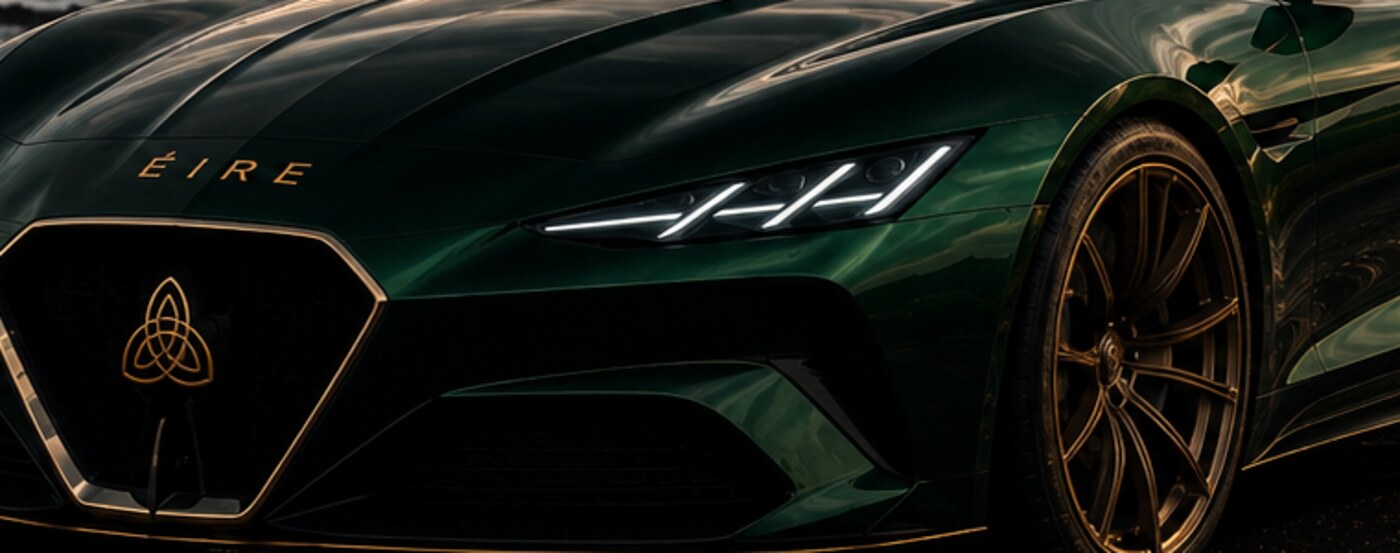
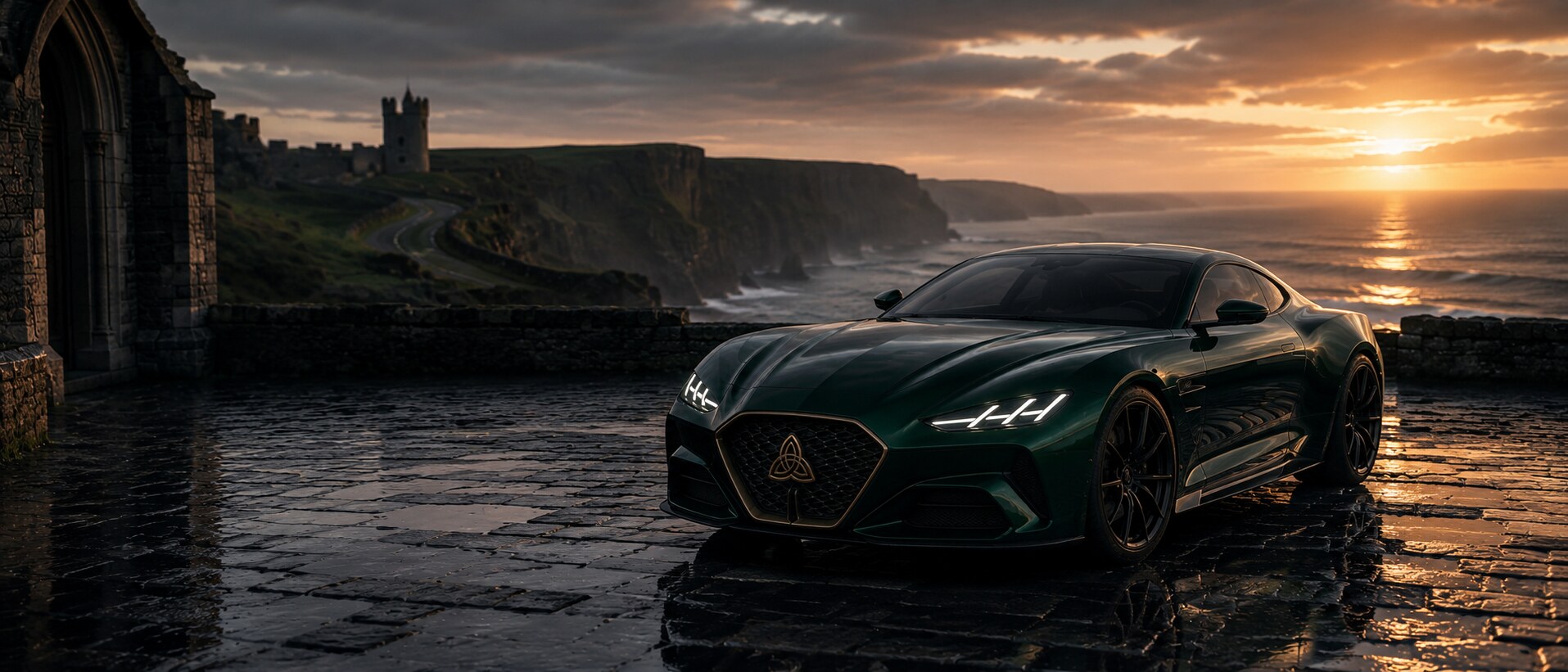
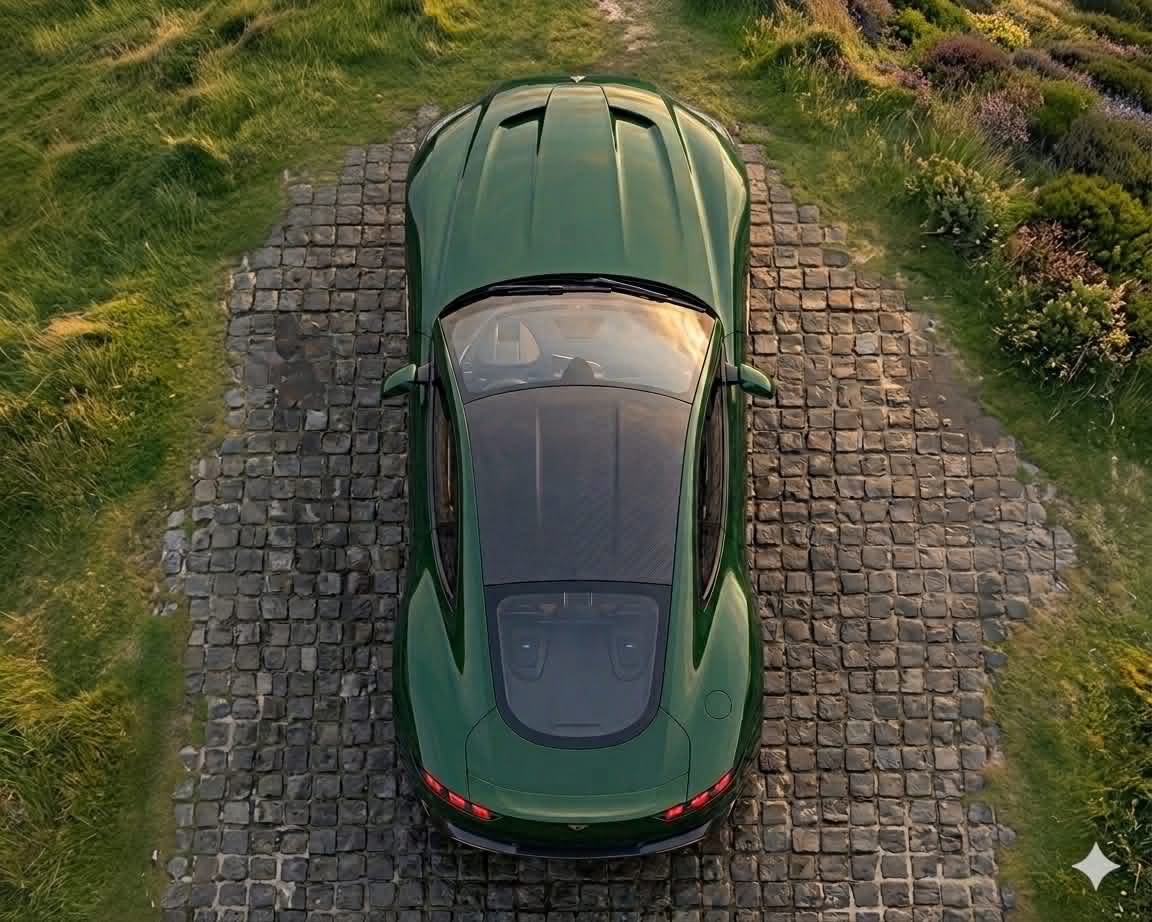
The Éire Eden GT will be built in a run of exactly fifty cars — not as a gesture, but as a discipline. As an all-electric 2+2 grand tourer with all-wheel drive and a target range of more than 300 miles, it is conceived from the outset as a software-first machine with a digital cockpit at its heart. None of that ambition is served by haste, and fifty is the number at which ambition and craft can meet. It is large enough to be a serious motor car and small enough to be a genuinely considered one.
The figure follows from capacity rather than the other way around. Hand-finished, Irish-inspired craft cannot be rushed; there is only so much of it that can be done well in a given period, and pretending otherwise would betray the very thing that makes the car worth building. Fifty is the honest answer to a simple question: how many cars can be made to this standard without diluting it? The Eden GT is currently in development, and that standard is being set deliberately, not retrofitted — the number was chosen to protect the work, not the other way around.
Fifty is also a number that preserves intimacy. It is small enough that every owner can be known, every car remembered, and the community around the marque kept close. Reservations are planned to open first to the subscribers and journey-followers who have been part of the story from the beginning — because a limited run should belong, first, to the people who chose to be there before there was anything to choose. That sequence is itself a statement of values: the first cars go to the first believers.
Above all, fifty is a statement about permanence over volume. The Eden GT is not the start of an attempt to be large; it is an attempt to be lasting. Born of Ireland and built for the world, it is meant to be one of fifty considered objects — kept, driven, and remembered — rather than one of countless cars made to be replaced. The decision to stop at fifty is, in the end, the same decision that the great houses have always made when they wanted to build something that mattered: to choose depth over breadth, and to let the smallness of the run become the proof of the care within it.