What beauty in a car actually means
We use the word 'beautiful' loosely, and cars suffer for it. A car can be aggressive, futuristic, expensive-looking or simply loud — and none of those is beauty. Beauty in an automobile is quieter than that. It is the rightness you feel before you can explain it: the sense that nothing could be added and nothing taken away. It lives in proportion first, surfacing second, and detail a distant third.
Proportion is the relationship of the major volumes to one another — the length of the bonnet against the cabin, the height of the body against the wheels, the visual mass sitting forward or aft. Get proportion right and a car can wear modest detailing and still look magnificent. Get it wrong and no amount of clever creasing will save it. The great coachbuilt cars understood this; so do the few modern designers still permitted to.
Surfacing is the next layer — the way light travels across a flank. A beautiful surface has tension, like fabric pulled taut, and reads cleanly as you walk past. The most admired bodies tend to do more with less: one confident line rather than five nervous ones. Restraint, here, is not absence. It is confidence.
The freedom the electric platform gives a designer
For a century, the combustion engine dictated the shape of the car. It demanded a tall nose, a long bay to house itself, cooling apertures, and an intake for air. The designer worked around an immovable object. The electric platform removes that object, and with it a great many compromises — and this is the genuine, and often overlooked, gift of electrification to beauty.
With the heavy components laid low and flat between the axles, the centre of mass drops and the car can sit closer to the road without losing comfort. The nose no longer needs to rise to clear a tall block, so it can fall away — a low, clean prow that pedestrians and pen alike find graceful. The cabin can be pushed rearward over a long, uninterrupted bonnet, recovering the classic cab-rearward silhouette of the grand tourers without a single cylinder beneath it.
Volumes grow cleaner, too. Without the thermal demands of a large engine, the body needs fewer vents, fewer ducts, fewer interruptions in its surface. A designer can finally pursue the unbroken flank that older eras only dreamed of. Wheels can be pushed to the corners, shortening overhangs and lending the planted, athletic stance that the eye reads instantly as 'right'.
None of this is automatic. An electric platform can just as easily produce something bloated and anonymous, and many have. The freedom is real, but it still asks for taste.
Beautiful electric cars worth admiring
Several makers have used that freedom well, and any honest guide should name them. The Porsche Taycan is, to many eyes, the most resolved electric car yet drawn — a low, wide, faithfully Porsche silhouette that proves an EV can carry decades of design heritage without parody. Its surfacing is disciplined, its stance impeccable, and it looks quick standing still in the way only a well-proportioned car can.
The Lucid Air takes a different and equally valid path. Where the Taycan is taut and athletic, the Air is serene — a long, elegant saloon whose packaging genius lets it pair a generous cabin with a remarkably low, clean body. It is a study in calm surfacing, and a reminder that beauty need not raise its voice.
The Maserati GranTurismo Folgore deserves its place for showing that an electric grand tourer can be sensual rather than clinical. It carries the long-bonnet, cab-rearward grace that the GT tradition demands, with the soft, Italian voluptuousness of surfacing that no spreadsheet ever produced. It is proof that electrification need not flatten a marque's character.
These cars differ enormously in intent, yet share the fundamentals — honest proportion, confident surfacing, a stance that looks settled. That is the lesson worth carrying: beauty is not a single style but a set of disciplines, expressed through many temperaments.
Where the Éire Eden GT fits
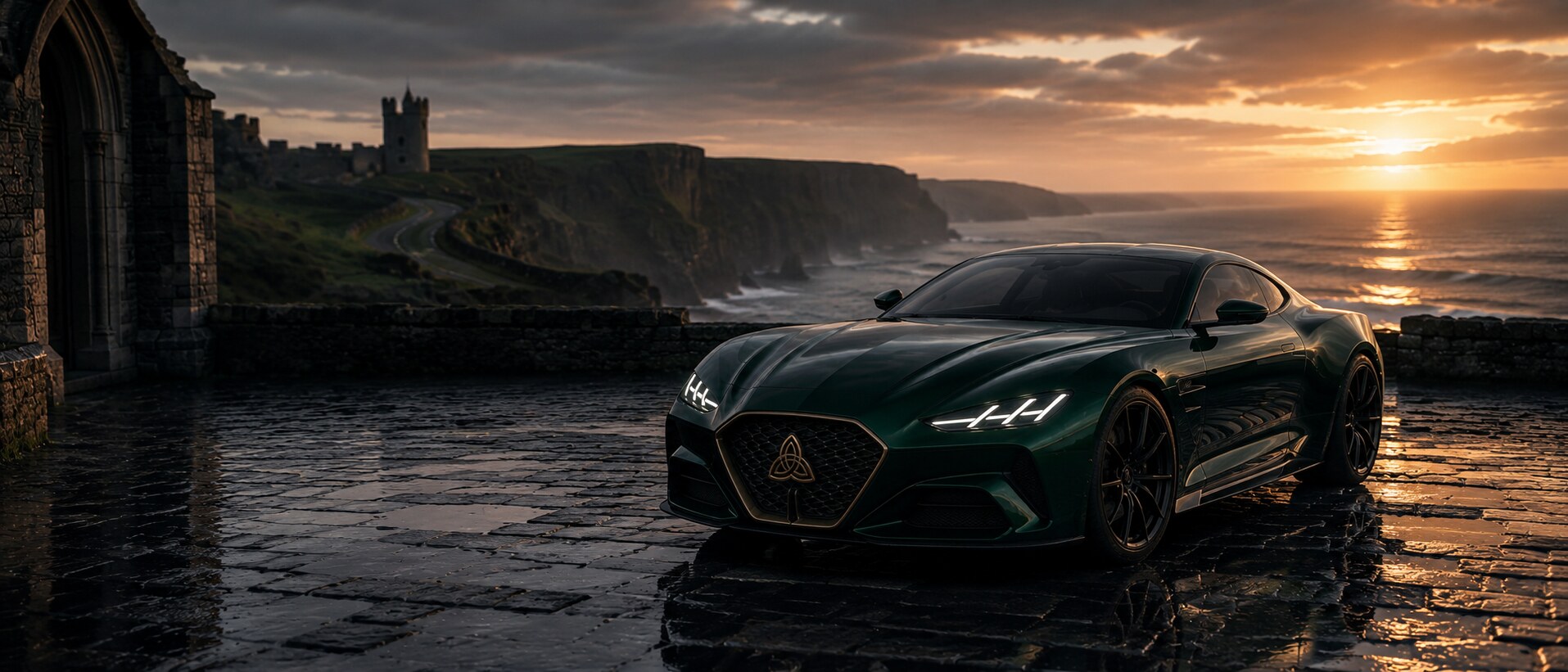
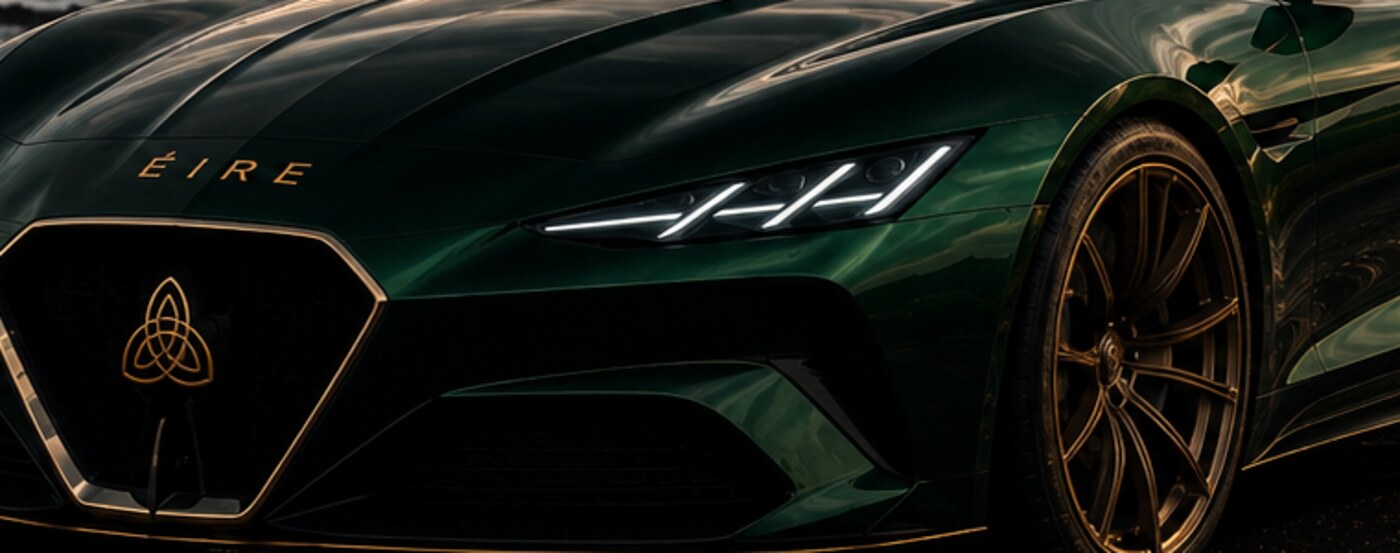
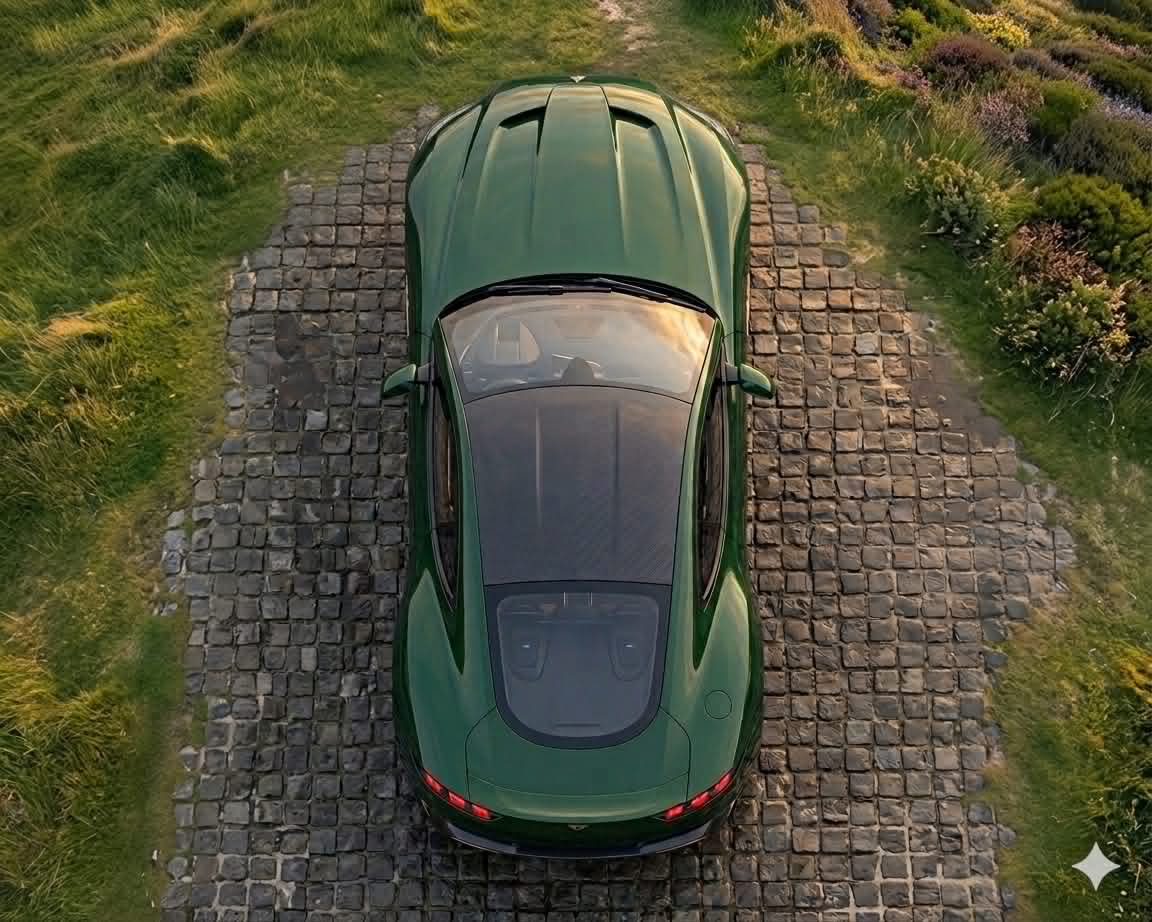
It is against that admired company that we place the Éire Eden GT — modestly, and as one beautiful design among others rather than above them. The Eden GT is an all-electric 2+2 luxury grand tourer, currently in development, conceived design-first around the qualities described here: honest proportion, a long cab-rearward bonnet over a low nose, clean unbroken volumes, and a planted, restrained stance.
The car is Irish-inspired and hand-finished, drawing on a quieter, older idea of luxury — beauty as craft rather than spectacle, restraint rather than flourish. Strictly limited to fifty examples, it is intended as a considered object rather than a mass statement, with a software-first digital cockpit chosen to keep the interior calm and uncluttered in service of the same restraint that governs the exterior.
The ambition is plain in the marque's own line — 'Born of Ireland. Built for the World.' — but the Eden GT makes no claim to be the most beautiful electric car. It aims only to belong honourably in the conversation, drawn by the same principles that make the Taycan, the Air and the Folgore worth looking at. Whether it earns that place is, rightly, for the eye to judge when it arrives.