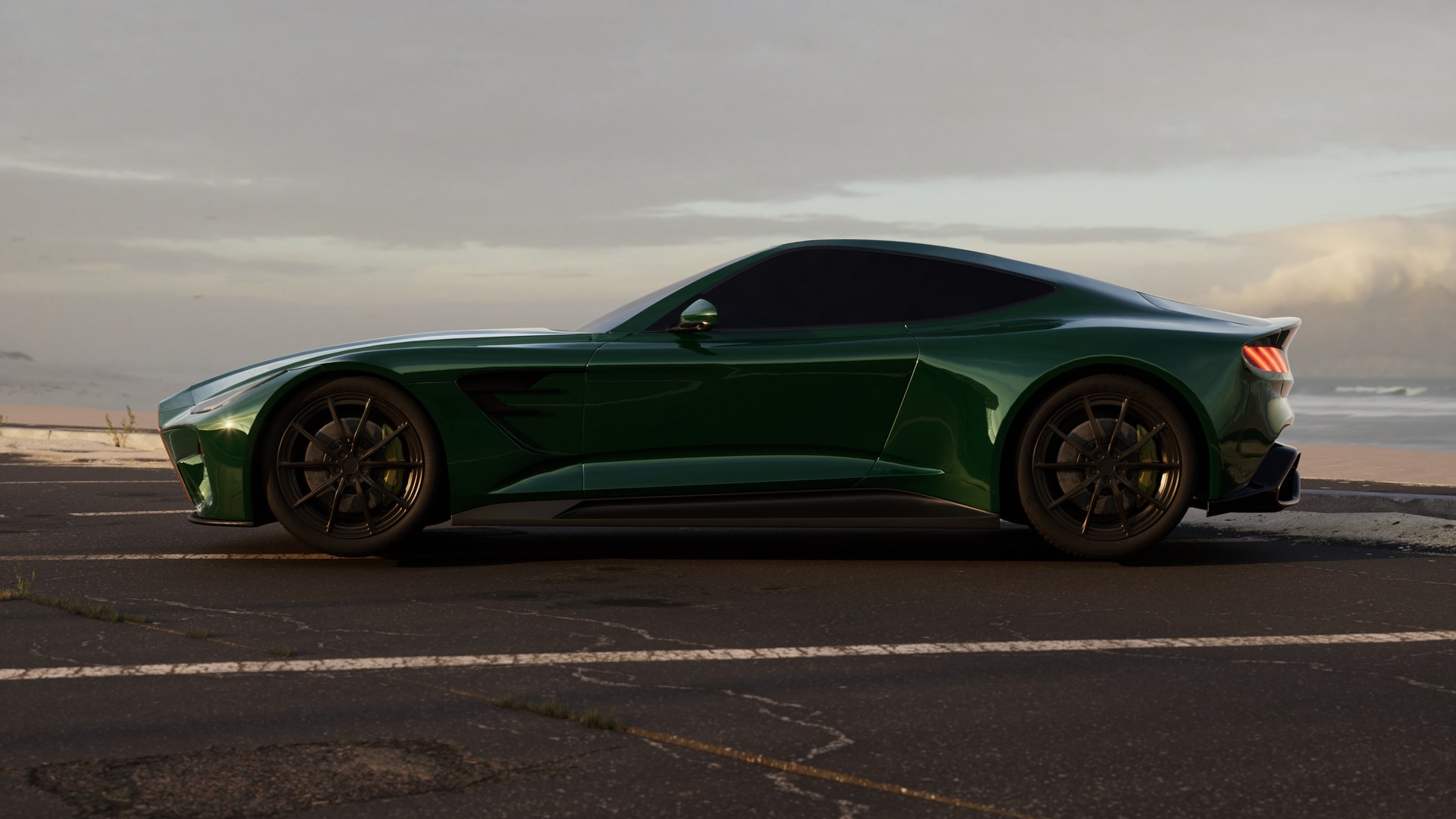
The eye reads motion from proportion
A car at rest cannot move, so the brain does the next best thing: it predicts. It looks at where the mass sits, which way the lines lean, and how much of the body the wheels are carrying, and it guesses what would happen if the car let go. A shape that looks like it is already leaning into its own departure reads as fast. A shape that looks settled, upright and evenly balanced reads as calm — which is fine for a family car and fatal for a sports car.
That prediction takes less than a second and it is almost entirely proportional. Grilles, badges and vents arrive later and can only decorate a verdict the proportions have already delivered. This is why designers spend most of their effort on the side view before anyone is allowed near the details.
Wheels, and the body over them
Start with the wheels, because the eye does. The wheel-to-body ratio — how large the wheels look against the height of the body — is the single strongest speed cue a car has. Large wheels under a low body read as athletic; small wheels under a tall body read as a box on casters. It is the same reason a greyhound and a bulldog look like they are built for different jobs.
Second, where the wheels sit. Pushed out to the corners, with short overhangs and a long wheelbase, they look like they are gripping the ground. Tucked inboard with the body hanging past them at each end, the car looks as though it outgrew its own chassis.
Third, the negative space inside the wheel arches. A tight arch with little daylight between tyre and bodywork says the car is sitting on its springs, ready. A tall gap says it is sitting on stilts. Designers chase that small shadow line obsessively, and it is one reason a car can look slower on the road than it did on a show stand.
The lean: rake and the rising shoulder line
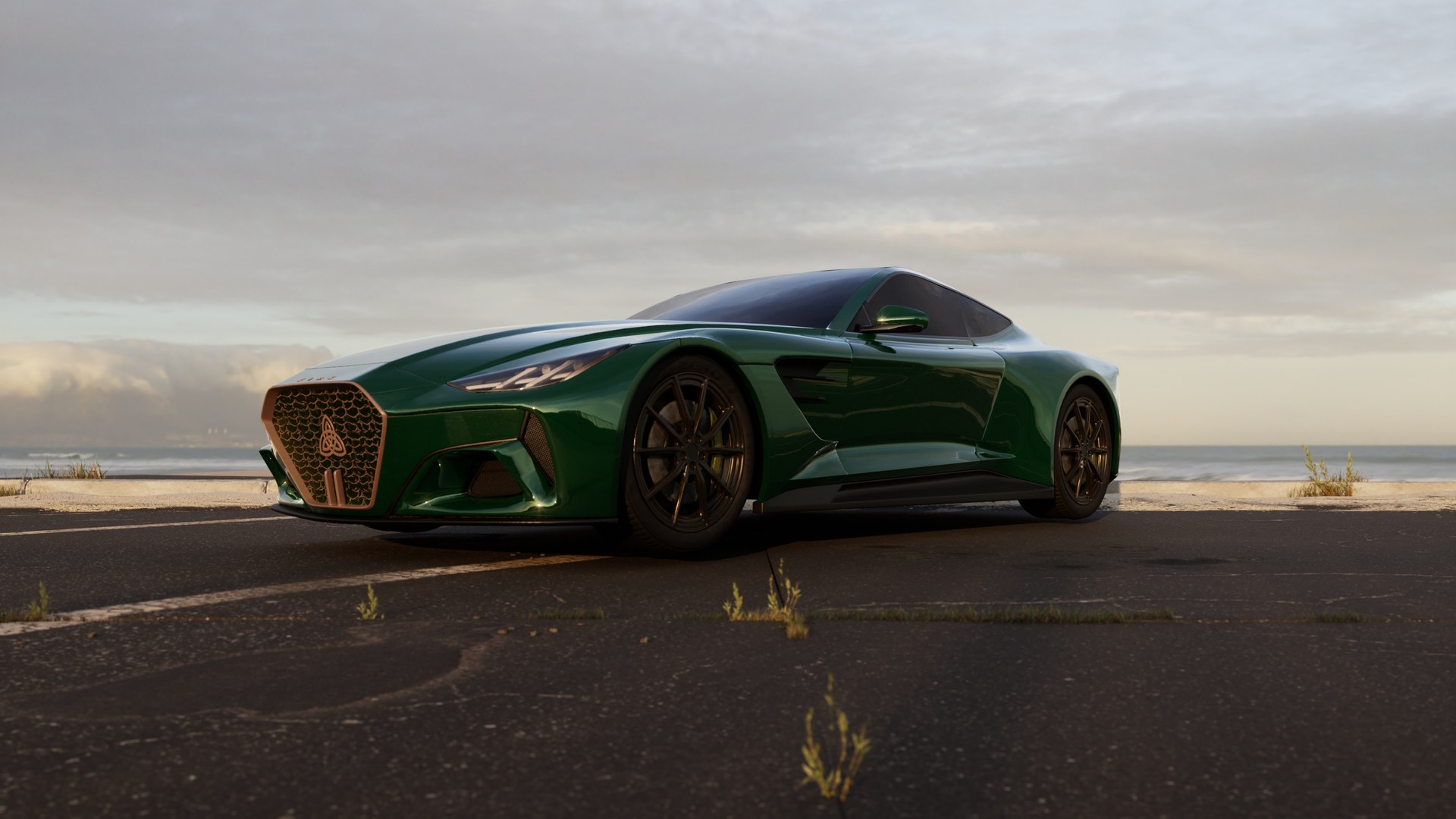
Rake is the angle of the whole car relative to the ground. A nose that sits slightly lower than the tail gives the car a forward lean, like a runner tipping out of the blocks. Even a degree or two of it changes the car’s mood; perfectly level reads stately, and tail-low reads like a car that has been loaded with luggage.
The body lines reinforce or undo that lean. The shoulder line — the crease or highlight that runs along the flank at roughly the height of the door handles — is the line the eye follows from nose to tail. If it rises toward the rear, the car appears to be coiling, gathering itself over the back wheels. If it falls, the car appears to be settling. A rising shoulder is one of the oldest tricks in the book because it works on everyone, including people who have never thought about car design in their lives.
Above the shoulder sits the glass, and the way the body sides curve inward as they rise — tumblehome — decides whether the car looks heavy-shouldered and muscular or tall and narrow. More tumblehome narrows the roof, widens the hips by comparison, and makes the car look like it is standing on its track rather than balancing above it.
Where the cabin sits
The position of the passenger compartment along the car tells you what kind of car it is before you have read the badge. Cab-rearward design — a long bonnet, the base of the windscreen set well behind the front axle, the cabin pushed toward the rear wheels — is the silhouette of the front-engined grand tourer and has been since the coachbuilt era. It reads as powerful because the long bonnet implies something large and important under it, and because the driver appears to sit over the driven wheels.
Cab-forward design does the opposite: the windscreen base moves forward, the bonnet shortens, and the cabin takes up more of the car’s length. It is the natural shape of a mid-engined car, and of any car that puts people first and machinery second. Neither is wrong. They are different answers, and the eye knows which question each one is answering.
A long bonnet is worth dwelling on, because it is often misread as a styling preference. Visually, it stretches the distance from the front axle to the driver and lengthens the whole car in the eye without raising the roof. The cabin becomes a cockpit perched at the back of a machine rather than a room in the middle of one. That is why a cab-rearward car can look fast at a glance even when it is a large, comfortable thing.
The nose and the mouth
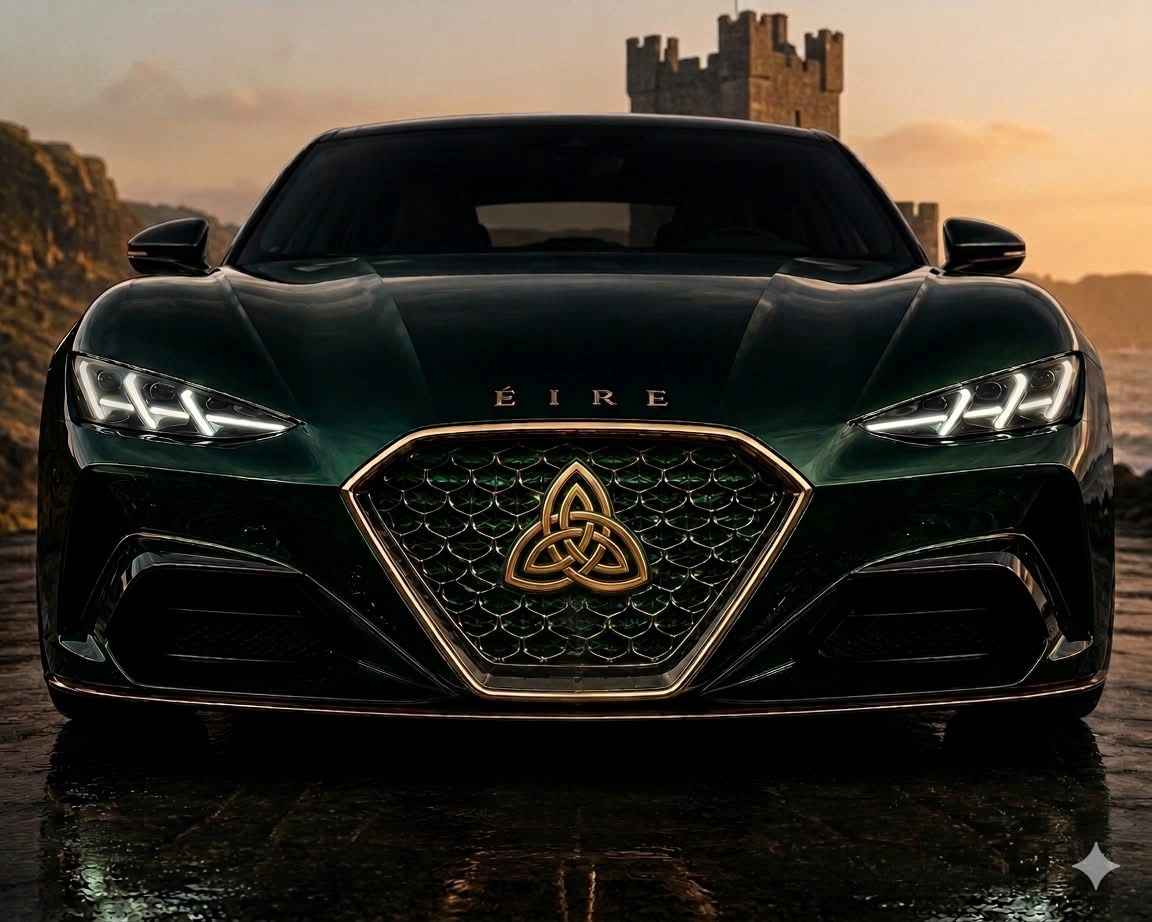
Now the front. A low, wide mouth reads as intake — air going in, work being done — and the lower and wider it is, the more purposeful the car looks. A tall, narrow grille belongs on an upright car, and it instantly raises the visual centre of gravity.
The nose also sets the rake. A front end that drops toward the ground, with the headlamps set back and the bonnet falling away ahead of them, carries the eye downward and forward, and the whole car follows. A blunt, vertical nose stops the eye, and a car that stops the eye at the front reads as a car that is standing still.
Lamps help. Slim, horizontal lamps stretch the car sideways and make it look lower; round or tall lamps make it look friendlier and more upright. A single clean band of light across a low nose is one of the fastest-looking things you can put on a car — and one of the easiest to ruin by adding a second thing beside it.
The rear: width, lamps as a line, the tail cutting off cleanly
People see more of a fast car’s back than its front, because that is the view they get. The rear has three jobs.
First, width. Rear track visible from behind, the body drawn tight over it, the lower bodywork gathered in beneath — this is where visual mass over the rear axle lives. A car that looks heavier at the back looks like it is being pushed from the rear, which is exactly what a driven rear axle does. Muscle over the back wheels is a statement about where the force comes from.
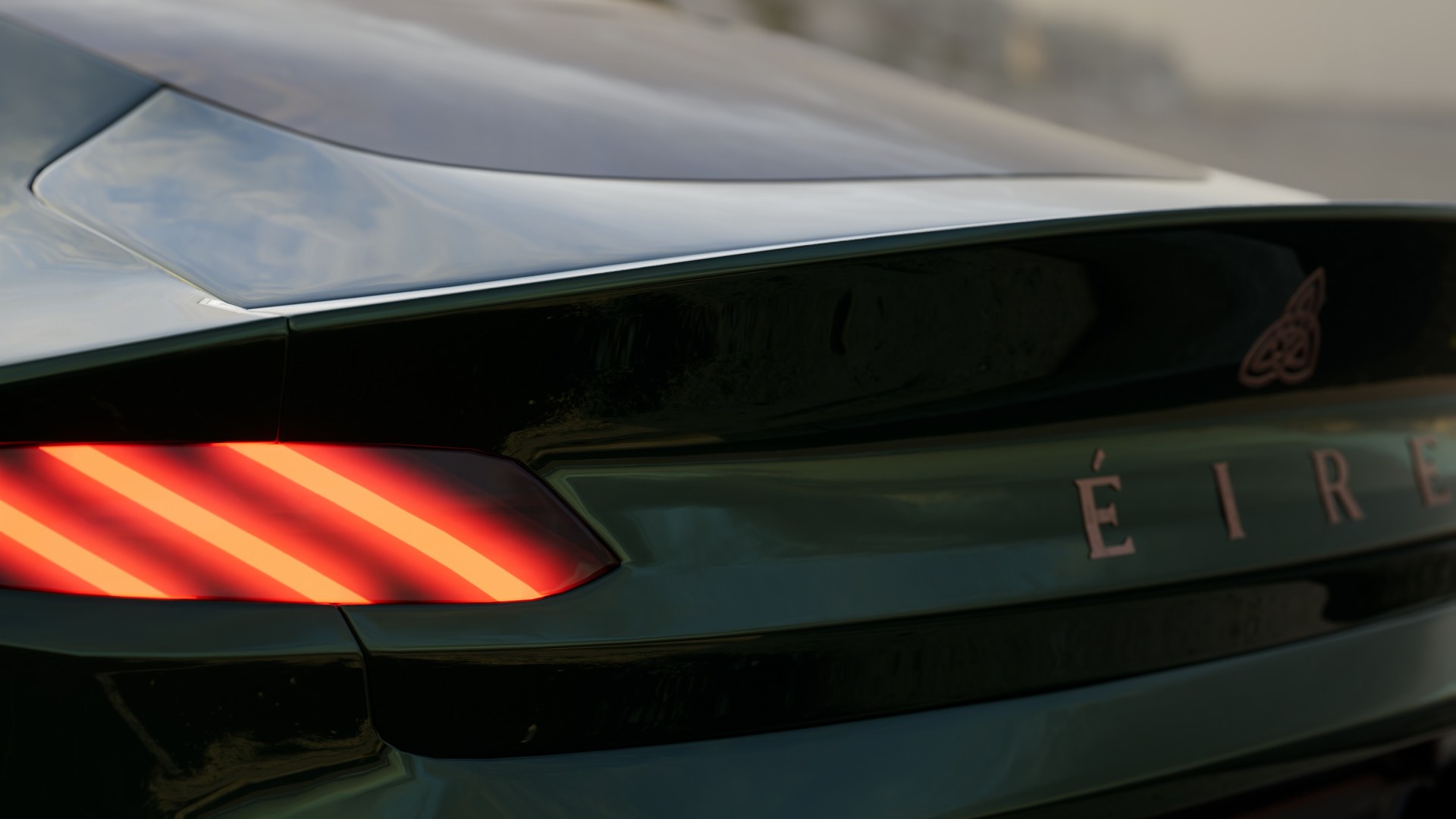
Second, the lamps as a line. A thin, continuous horizontal lamp signature stretches the car across its full width and lowers it in the eye, the same trick the headlamps play at the front. Tall, separate lamp clusters do the opposite. The most confident rear ends use the lamps as a single stroke and let everything else stay quiet.
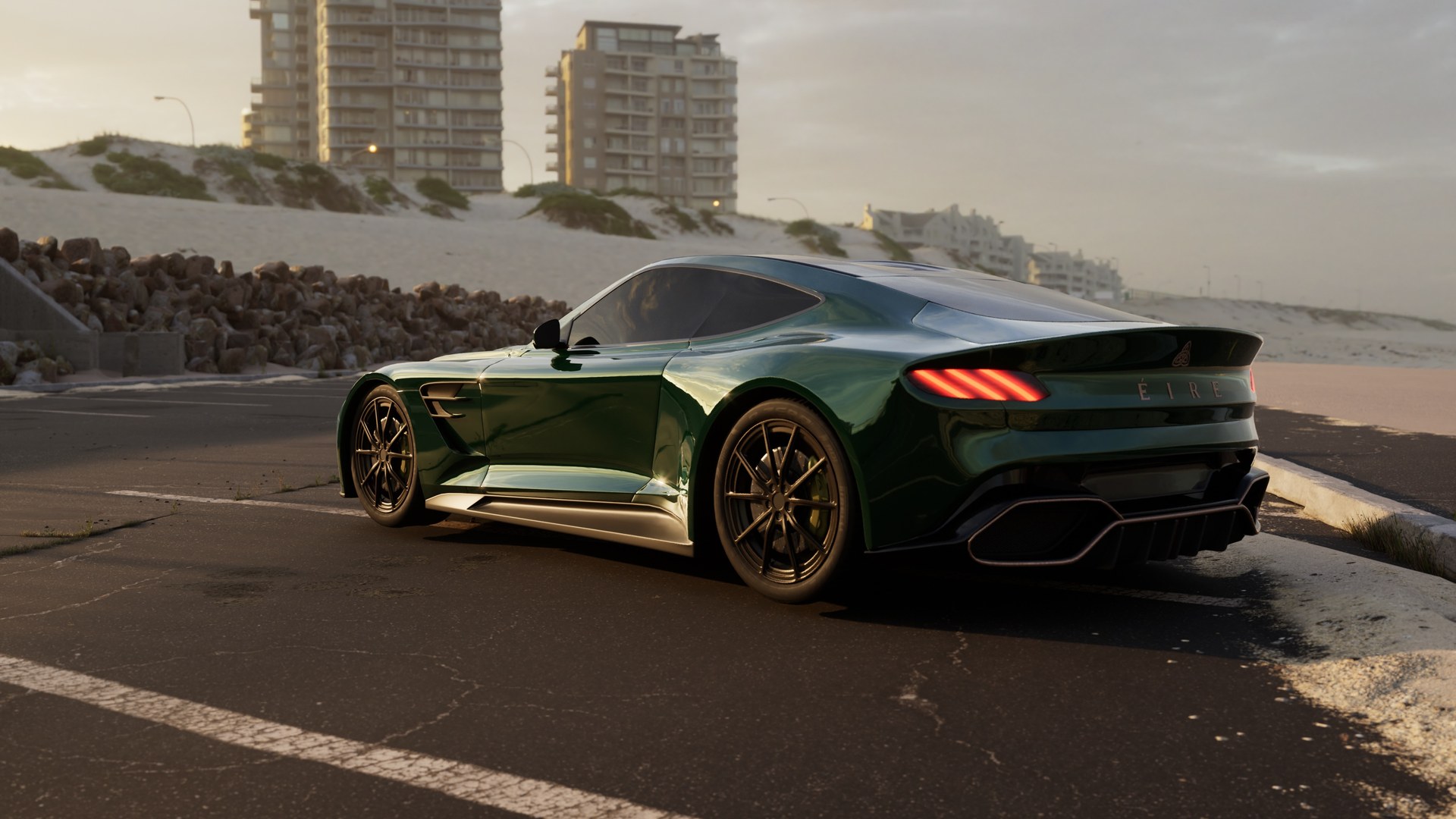
Third, how the tail ends. A rear that cuts off cleanly — a short deck, a crisp edge where the air lets go — reads as finished and fast. A tail that droops or drags a slab of bodywork behind the rear wheels reads as luggage. This is the logic behind the ducktail and the Kamm tail, and why so many beautiful fast cars simply stop at the back as if cut with a knife.
Restraint: why over-styling reads slow
Here is the part most people get backwards. Adding things to a car — vents, strakes, creases, extra lamps, a second grille — does not make it look faster. It makes it look busy, and busy reads slow, because the eye has to stop and sort out the noise instead of sliding along the body toward the horizon.
Real speed cues are mostly subtractive. One shoulder line instead of three. One lamp signature instead of a cluster. A vent where air genuinely needs to go and none where it does not. The fastest-looking cars ever drawn are, almost without exception, the plainest. Decoration is what a car wears when its proportions have not done the work.
Two answers to the same question
Éire Motor Company is building two very different cars, and they answer the question in two very different ways. Both are described here as design intent — these are cars in development — and each is the right answer only to its own brief.
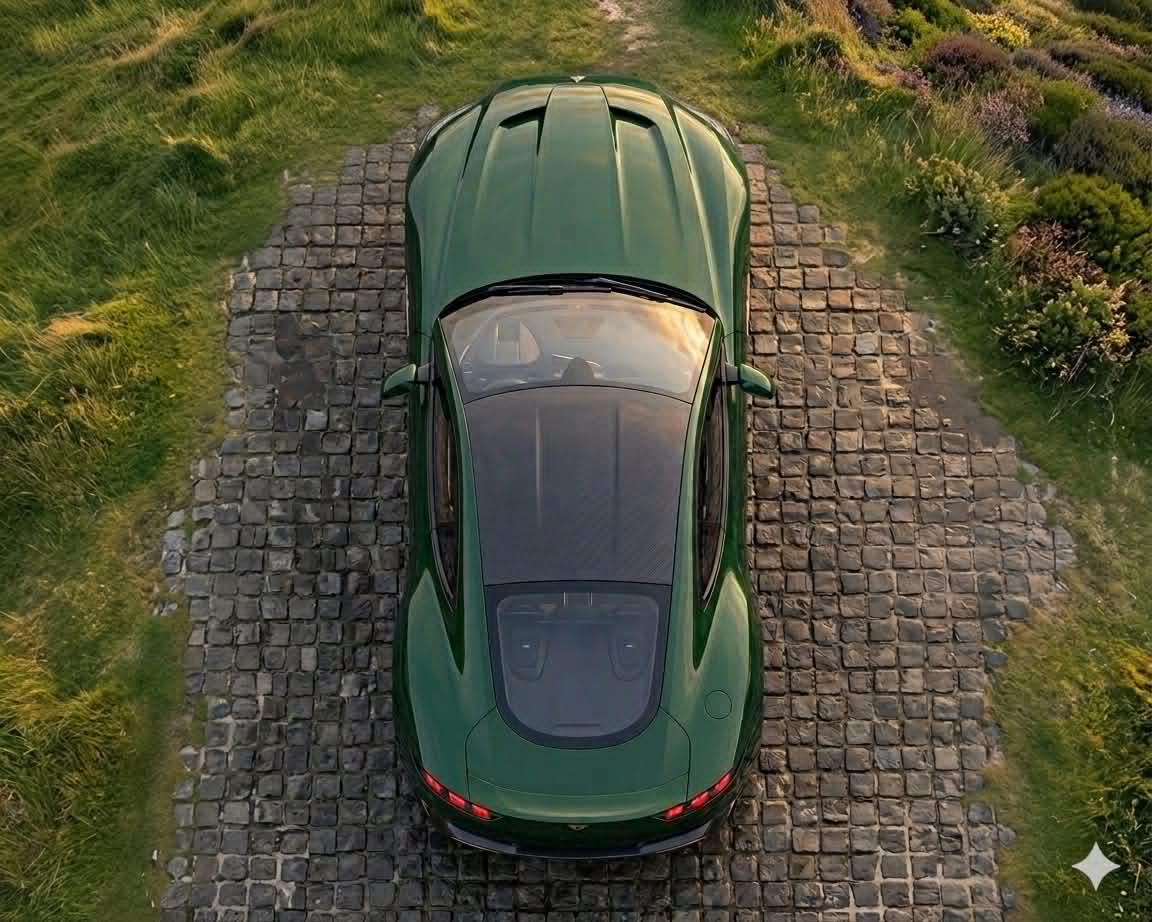
The Eden GT is a front-engined grand tourer, and it uses the grand tourer’s native vocabulary: a long bonnet, the cabin pushed back toward the rear wheels, a shoulder line that rises gently toward the hips, and visual mass gathered over the rear axle. The nose drops away low and wide. The tail finishes with a lifted lip and the lamps drawn as a single line, so from behind the car reads as width first and detail second. It is meant to look fast the way a grand tourer should — composed, inevitable, in no hurry to prove it.
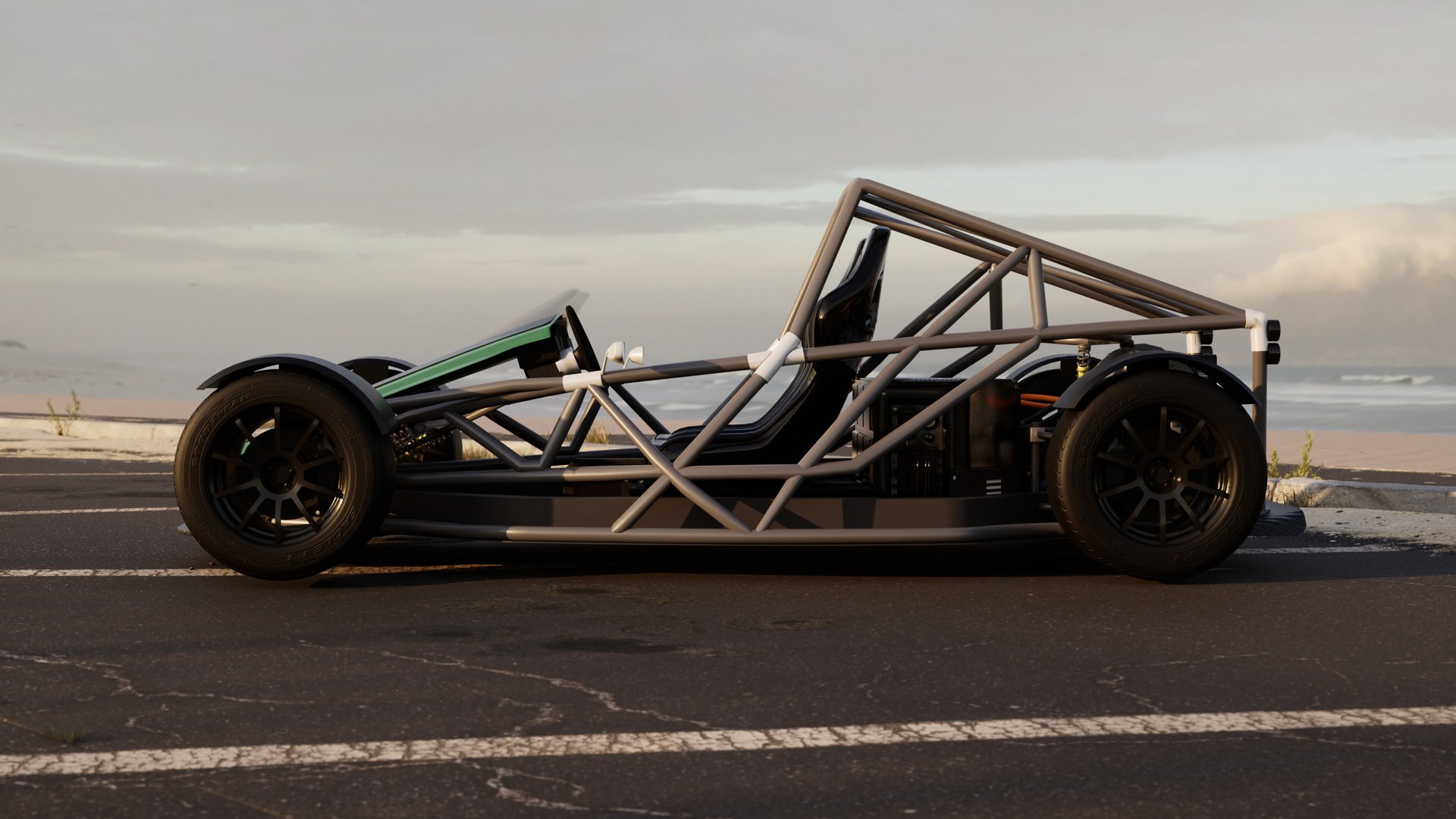
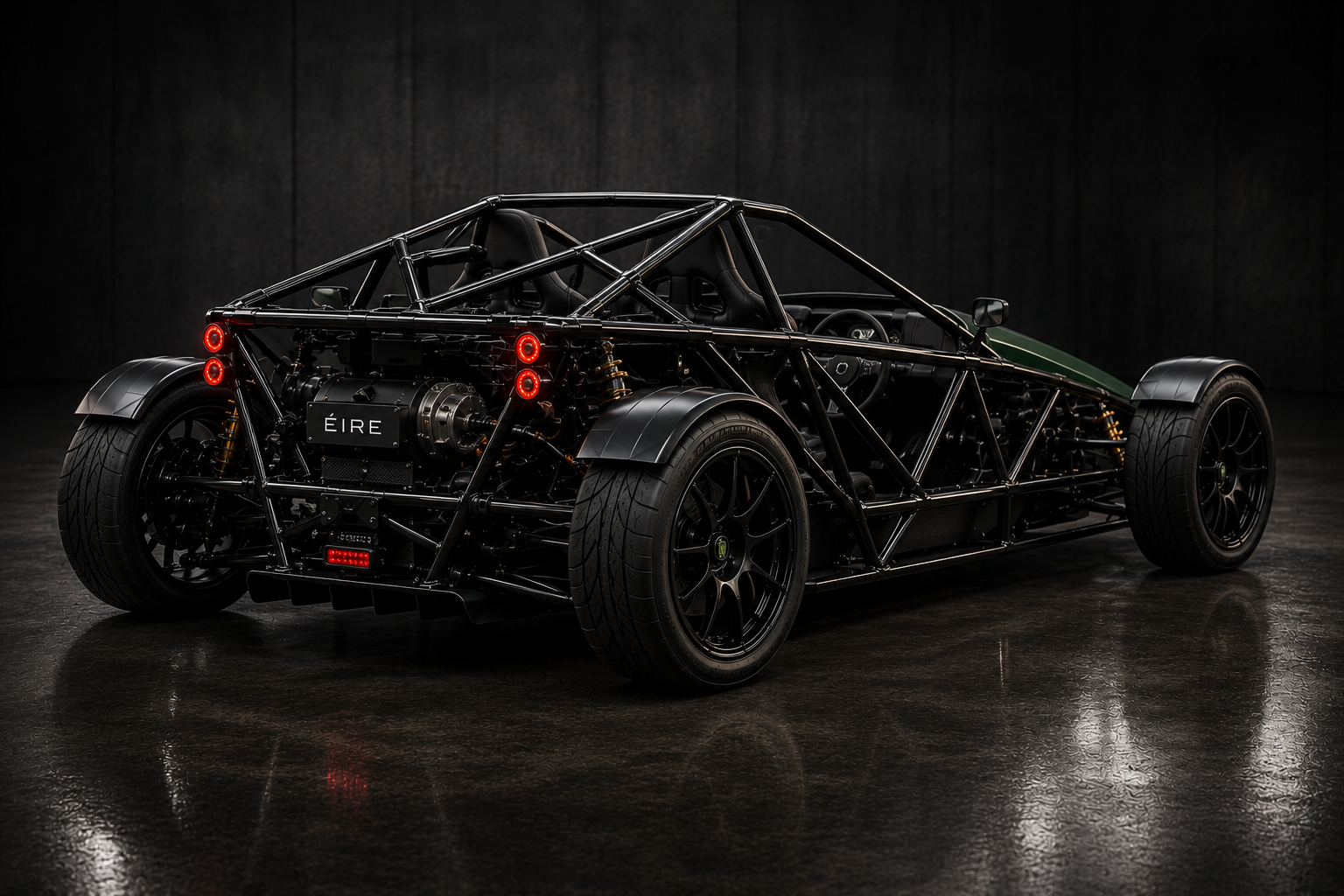
The Forge Mk I is an all-electric, lightweight, open track-focused development car, and it cannot use any of those tricks, because it has almost no bodywork to draw them on. Its answer is more elemental. The wheels stand fully exposed at the corners under their own small wings, so the wheel-to-body ratio is as extreme as the question allows. The frame sits low between them, and everything normally hidden — tubes, suspension, the structure that carries the car — is the design. There is no shoulder line because there is no shoulder; the eye follows the frame rails instead. It looks fast standing still for the simplest reason: nothing on it is there except to go fast.
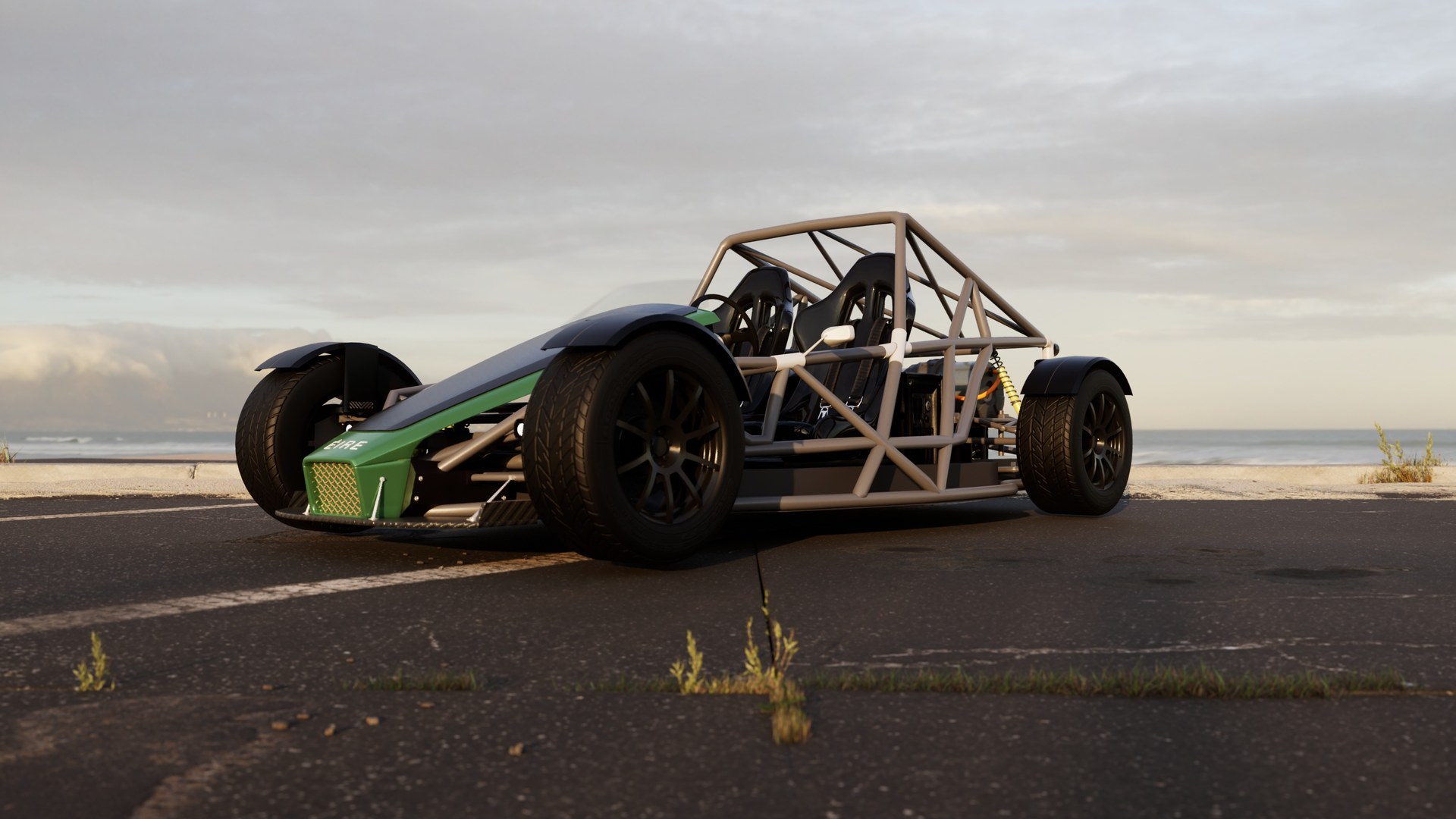
Put the two side by side and you have the whole argument. One car looks fast because its proportions are drawn to lean, gather and finish. The other looks fast because it has been reduced to its proportions and nothing else. Both are honest. Neither is decorated. And once you can read them, you will not walk past a car park without doing it.