Two Disciples of Lightness
Few cars worship weight the way these two do. The Caterham Seven is the original featherweight driver’s car — a direct descendant of the Lotus Seven and Colin Chapman’s famous instruction to “simplify, then add lightness.” Widely reported to weigh somewhere around 1,100 to 1,300 lb depending on specification, it remains one of the most distilled expressions of the motor car ever sold. There is almost nothing between the driver and the road, and that is precisely the point.
The Éire Forge Mk I arrives from the same chapel of thought, but it speaks a thoroughly modern dialect. Its design targets a kerb weight in the region of 1,800 to 2,050 lb — heavier than the Seven, as any electric car carrying batteries must be, yet astonishingly light by the standards of anything with a charge port. With a target output of roughly 295 hp sent to the rear wheels through a mechanical limited-slip differential, the Forge aims for a power-to-weight figure near 6.6 lb per horsepower. These are design intentions for a car still in development, but the ambition is unmistakable.
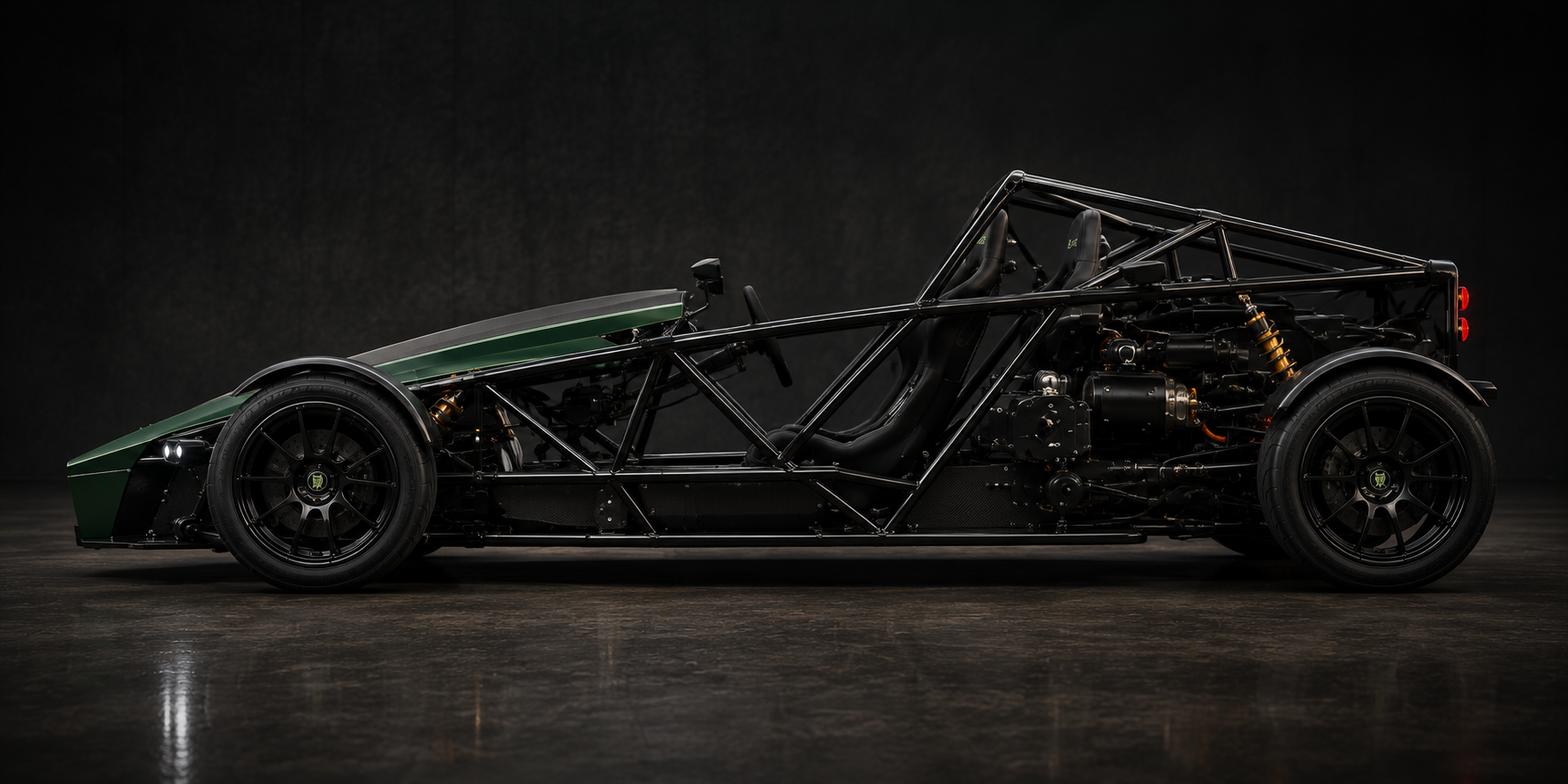
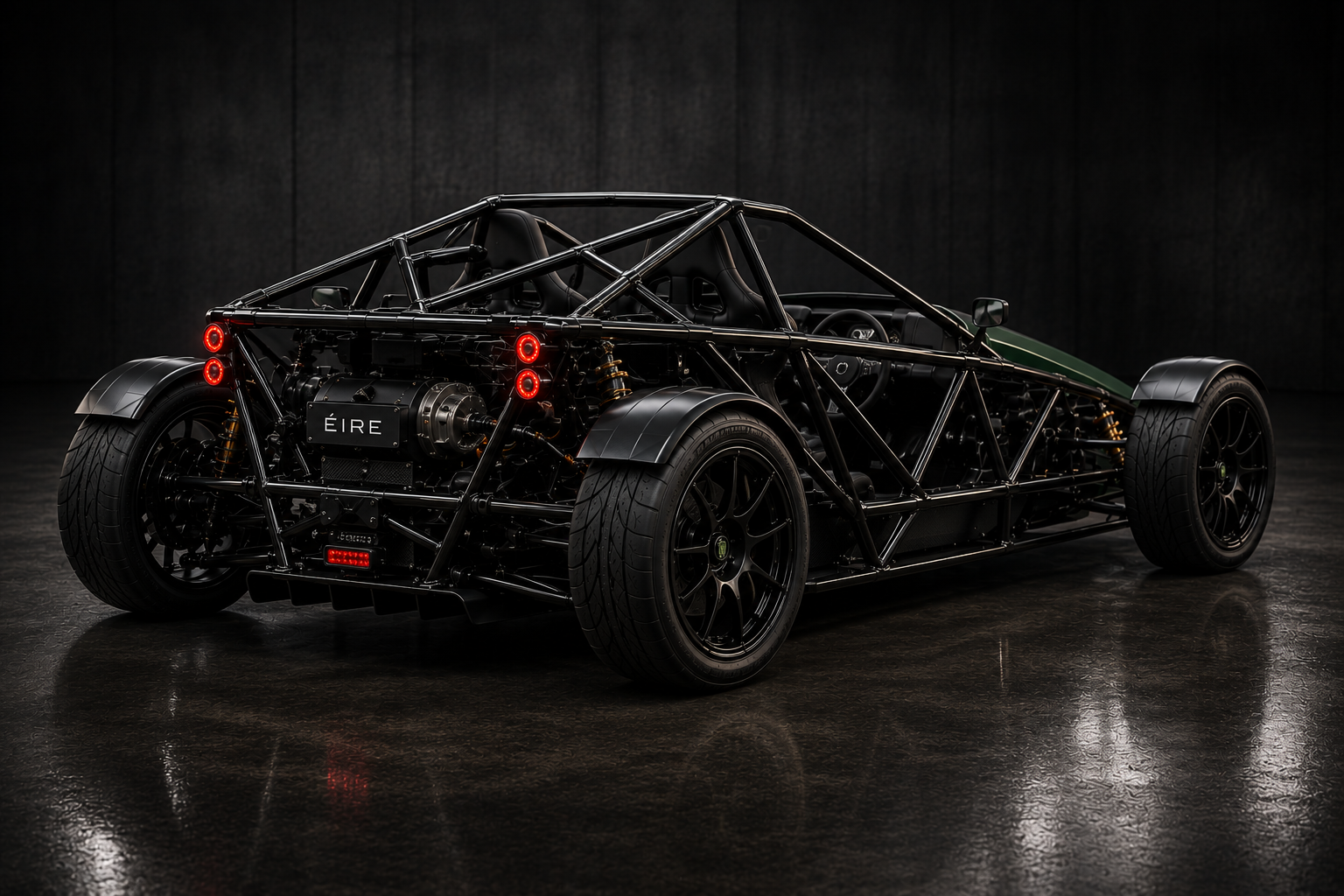
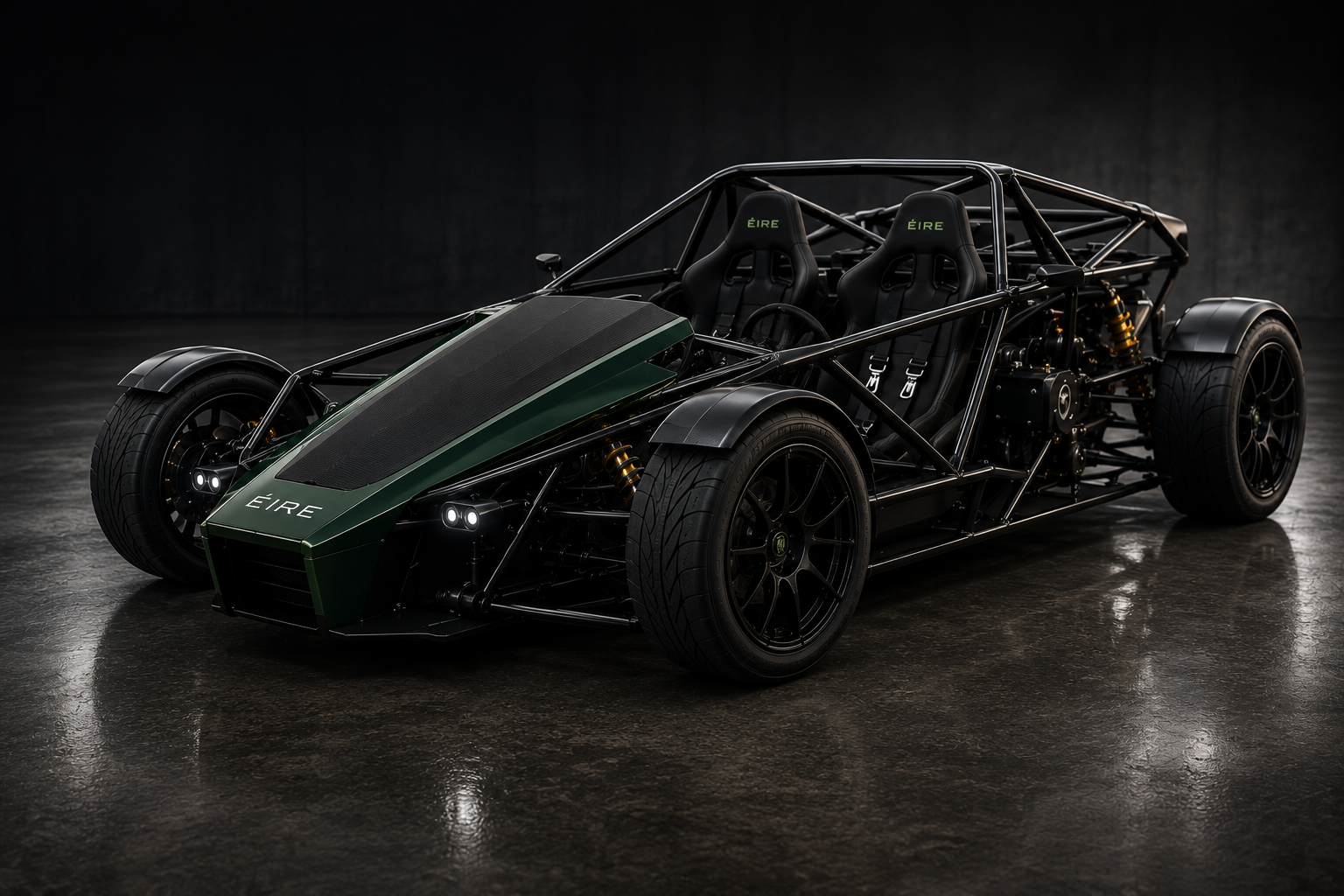
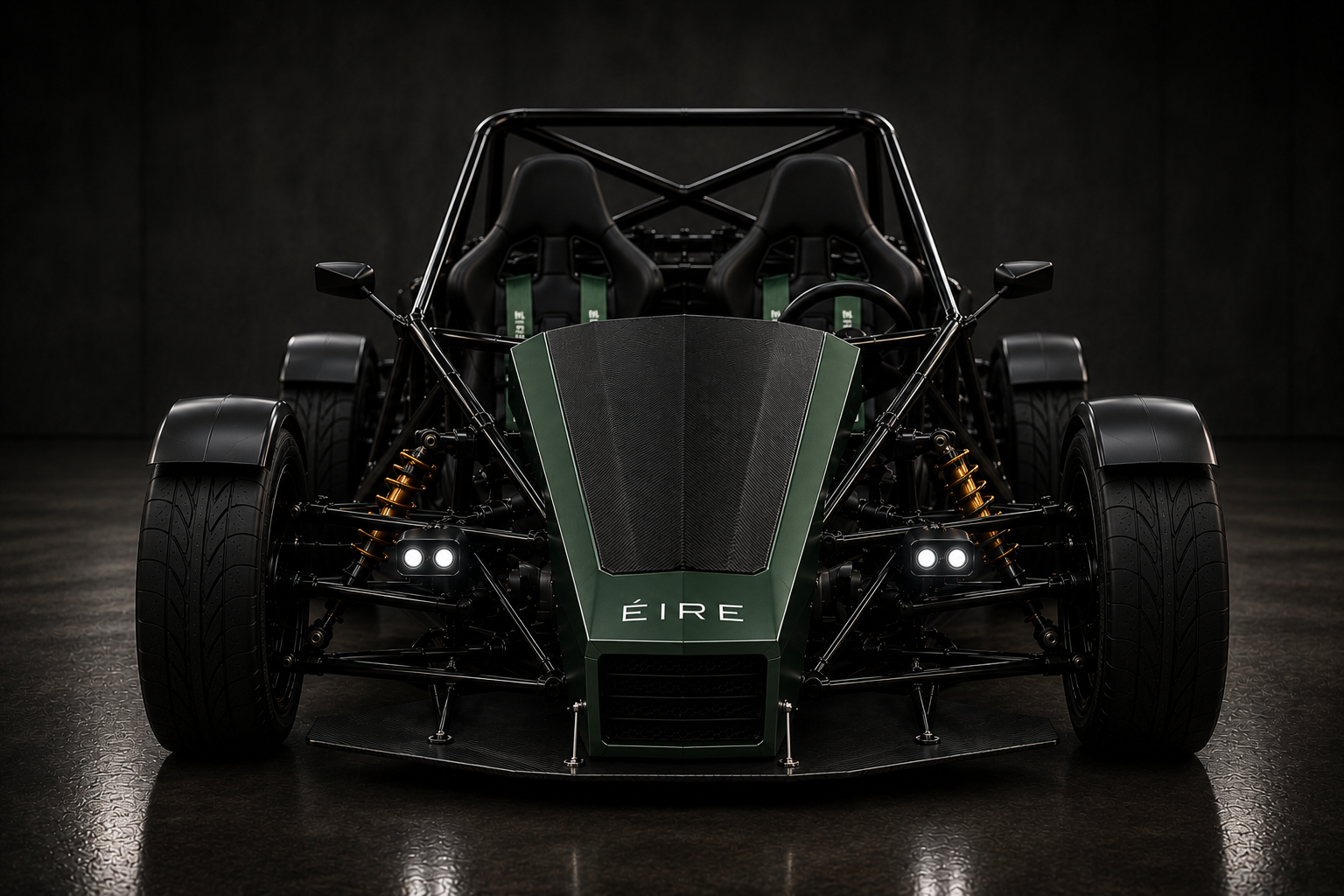
Where the Seven strips weight out of a classic clamshell-bodied roadster, the Forge wears its structure on the outside: an exposed tubular steel spaceframe, an exoskeleton finished in Irish racing green, framing an open cockpit for two. The philosophies rhyme even as the silhouettes diverge.
Analogue Soul, Electric Heart
This is the crux of the comparison. The Seven is gloriously, unapologetically analogue. A manual gearbox, the linear urgency of a naturally-aspirated engine, no electronic veil between intention and response — these are the qualities that have earned it decades of devotion. To drive a Seven well is to feel every input rewarded or punished in real time. It is a mechanical conversation, and for many enthusiasts no electric car can replace that dialogue.
The Éire Forge does not pretend otherwise. It offers a different kind of immediacy: the instant, seamless torque of an electric motor, delivered the very moment the driver asks for it. There is no clutch to balance, no rev band to chase — only a clean, ferocious surge interrupted by nothing. It is a more contemporary thrill, and an honest one. The Forge’s purity lies not in the absence of electronics but in the absence of mass, lag and isolation.
Neither approach is superior; they are simply different answers to the same question. The Seven asks the driver to master a machine. The Forge asks the driver to commit, then rewards that commitment instantly. One celebrates heritage and mechanical texture; the other celebrates response and the quiet, uncanny intensity of electric drive in a car that weighs almost nothing by modern measure.
Construction and Character
The Caterham’s shape is iconic — cycle wings, a long bonnet, that unmistakable upright grille — a form essentially unchanged in spirit since the 1950s. Its enduring appeal is partly nostalgic and entirely earned. Owners cherish the Seven’s simplicity, its serviceability, and the deep heritage that connects every example to the same Chapman bloodline.
The Éire Forge takes a more architectural view of minimalism. Rather than hiding its frame beneath bodywork, it presents the tubular steel spaceframe as the design itself — structure as ornament, function made visible. It is hand-built and strictly limited, the focused, stripped-back track sibling to Éire’s grand tourer, the Eden GT. Where the GT is a refined long-distance machine, the Forge sheds everything that does not serve the corner ahead.
Both cars reward the same kind of owner — someone who measures a car not by its screen count or its badge but by how alive it feels at speed. The difference is one of era and intent. The Seven is a beloved analogue heirloom; the Forge is a modern Irish answer to the same instinct, carrying the tagline “Born of Ireland. Built for the World.”
A Fair Verdict
If your idea of perfection is a manual gearbox, a naturally-aspirated engine and the lightest possible everything, the Caterham Seven is very hard to better — and at its featherweight figures, likely impossible to beat on the scales. Its legend is secure, and nothing here should be read as a challenge to it. It is, quite simply, the benchmark for analogue lightness.
The Éire Forge is not trying to dethrone the Seven so much as to carry its philosophy into a new age. It offers a comparable obsession with weight, a thrilling new powertrain and a striking exposed structure, all hand-finished in limited numbers. For a driver who wants that featherweight ethos with instant electric response, the Forge makes a compelling, modern case.
Choose the Seven for heritage, mechanical involvement and the purest possible analogue experience. Choose the Forge for electric immediacy, contemporary construction and Irish character. Both are honest, focused machines built around a single shared belief — that the best driver’s car is the lightest one.